
What’s the most valuable asteroid out there? The truth is, there’s no single answer. Several asteroids in our solar system hold huge amounts of metal, water, and other materials, which makes them worth more – on paper – than Earth’s entire economy. These resources include precious metals, industrial minerals, and even organic molecules that can reveal secrets about the origins of life.
This blog takes you on a tour of the most valuable asteroids, explaining what makes each one unique, what they’re made of, and why they matter for the future of asteroid mining. If you’ve ever wondered how the main asteroid belt, near-Earth objects, or even icy bodies beyond the Kuiper Belt fit into the big picture, keep reading.
Why Asteroids Are So Valuable
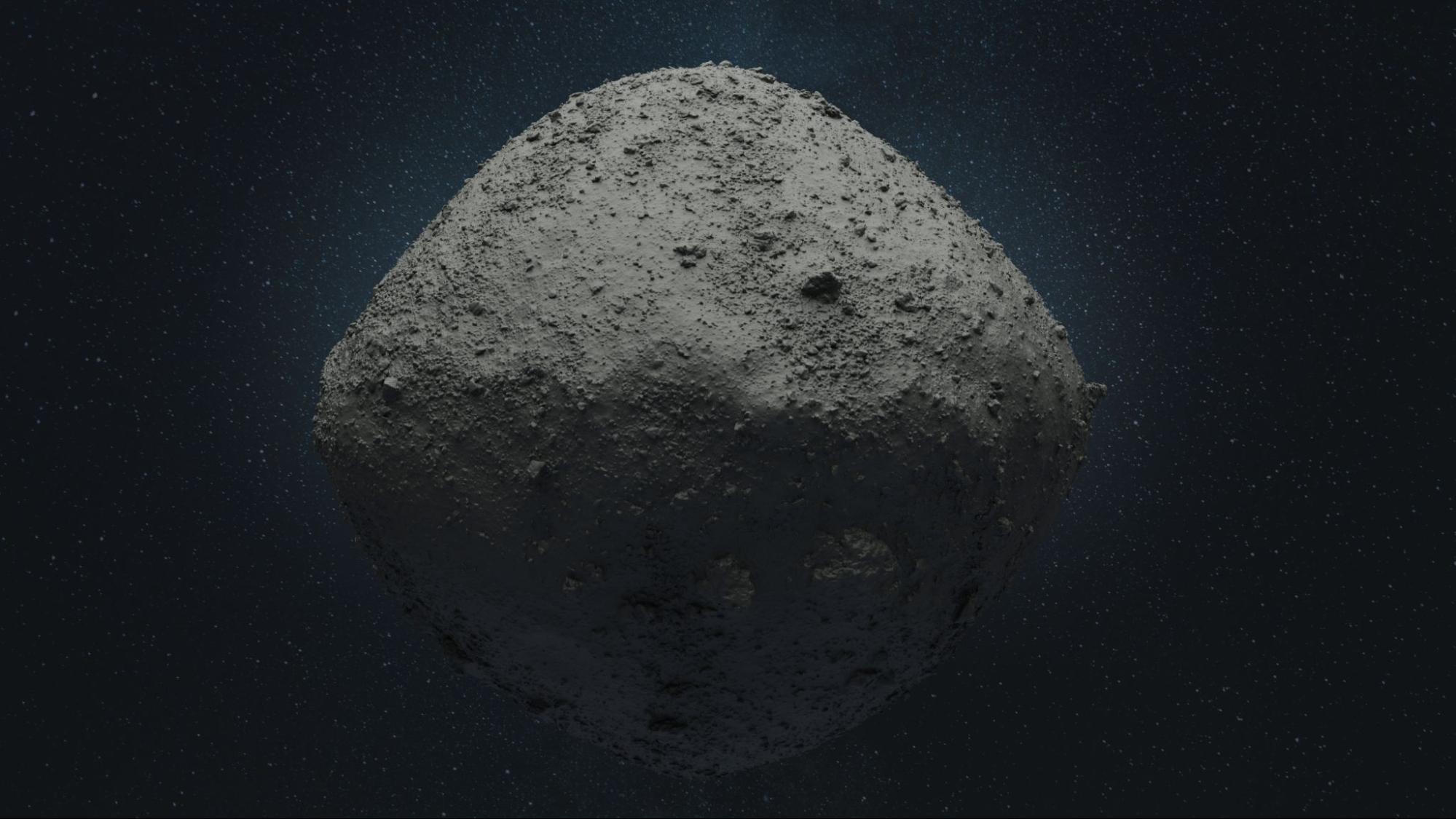 Asteroid Bennu
Before we dive into the list of the most valuable asteroids, it’s worth understanding what makes these space rocks so special in the first place. Asteroids aren’t all the same – far from it. They come in different types, each with its own asteroid composition and unique set of resources that can support exploration, science, and even future economies beyond Earth.
Let’s check out the main types that matter most for asteroid mining!
M-type asteroids
These are the metallic giants of space, made mostly of iron and nickel, often mixed with precious metals like platinum, gold, and rare elements. Scientists believe many M-types are the exposed remains of shattered metal cores from early planetary bodies. When these protoplanets broke apart billions of years ago, their dense interiors were left behind as isolated metal asteroids.
Some, like Asteroid 16 Psyche, may even have a structure similar to the nickel-iron core at Earth’s center. Because of this, M-types are prime targets for resource extraction. They could supply enough raw material to build habitats, satellites, and giant space stations without ever launching a kilogram of metal from Earth.
C-type asteroids
These carbonaceous bodies are the dark, primitive leftovers of the solar system’s birth. What makes them invaluable is their water-bearing minerals and organic molecules. Inside, you’ll often find hydrated clays, frozen water, and compounds like amino acids and carboxylic acids – the building blocks of life.
If humans are ever going to live and work far from Earth, these asteroids could provide fuel, water, and oxygen, all without the insane cost of shipping from our planet. Imagine refueling a spacecraft at an asteroid depot instead of paying thousands of dollars per kilogram to lift water into orbit – that’s the kind of future C-types can make possible.
S-type asteroids
These are the rocky middle ground: silicate-rich bodies with some metal mixed in. They aren’t as flashy as M-types or as resource-rich as C-types, but they still hold valuable mineral resources. Elements like magnesium, aluminum, and iron oxides in S-types could be processed for building materials in space. While they might not turn anyone into a trillionaire, they could still play a big role in large-scale operations for space construction.
The mix of these asteroid types in the asteroid belt and among near-Earth objects is what makes the solar system such an incredible warehouse of planetary resources. Each class supports different needs: M-types give us metals for infrastructure, C-types supply water and life-support chemicals, and S-types offer rock and minerals for structural material.
Mining these resources could support large-scale operations in space, from building habitats to fueling spacecraft, without depending on costly Earth launches. Future mining techniques might include thermal extraction, electrostatic separation, and even automated mining systems that work without human crews.
Of course, pulling this off isn’t easy. Space weathering, microgravity, and planetary protection concerns like avoiding contamination of celestial bodies make the challenge huge. But the potential payoff has fueled an entire asteroid mining industry, backed by agencies like NASA, the European Space Agency, and even the Luxembourg Space Agency, which supports businesses in the space resources sector.
Now, let’s dive into the stars – or rather, the rocks – and rank the most valuable asteroids we know today.
1. 16 Psyche – The Metal Giant in the Main Asteroid Belt
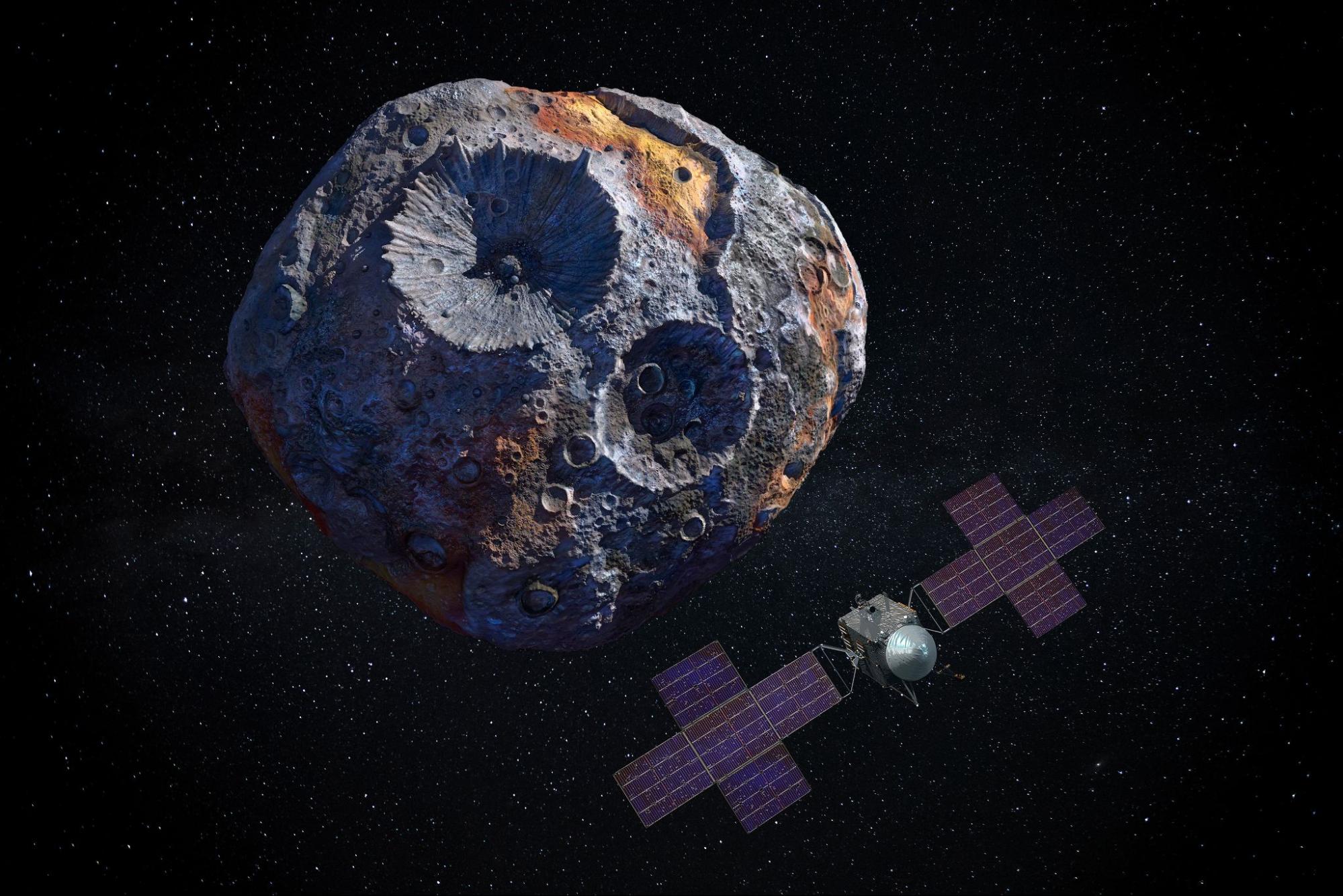 NASA’s Psyche mission spacecraft approaching Asteroid 16 Psyche
If you’ve heard of one metal asteroid, it’s probably Asteroid 16 Psyche. Located in the main asteroid belt between Mars and Jupiter, this massive space rock is about 220 kilometers wide and may be the exposed nickel-iron core of an early planet. Some scientists even compare it to Earth’s inner core.
What makes Psyche stand out is its composition. Radar studies and spectral fingerprints from telescopes – including the Hubble Space Telescope – show that Psyche is loaded with iron, nickel, and possibly traces of gold and platinum. Its estimated theoretical value? Around $10 quintillion, according to reports cited by CBS News. That’s 100,000 times the value of the global economy.
NASA’s Psyche mission is on its way to this incredible target. The Psyche spacecraft, built with help from the University of Arizona and the Lunar and Planetary Laboratory, launched in 2023 and is expected to reach Psyche by 2029. This mission will map the asteroid’s surface, study its asteroid composition, and confirm whether it really is the leftover metal core of a shattered planet.
But why does this matter? Studying Psyche can teach us how planetary cores formed, and the data will be crucial for future asteroid mining techniques. For the asteroid mining industry, Psyche represents the ultimate prize – even if space mining law and engineering realities mean no one is hauling its ore home anytime soon.
2. Asteroid (6178) 1986 DA – A Platinum Treasure Near Earth
Next on the list is a near-Earth object that has captured imaginations since the 1990s: Asteroid (6178) 1986 DA. Unlike Psyche, which is far away in the asteroid belt, 1986 DA orbits much closer to Earth. It’s about 3 kilometers wide and, like Psyche, it’s an M-type asteroid rich in metals.
What’s inside? Studies using radar signals suggest its surface is roughly 85% iron-nickel alloy, with a mix of silicate minerals. More exciting, it likely contains precious metals in enormous quantities. Early estimates suggest it could hold 100,000 tons of platinum and 10,000 tons of gold, making it one of the richest metal deposits ever found – anywhere.
If you add up the value of its platinum, gold, and other metals at current prices, you get figures in the trillions of dollars. Researchers believe its total metal content exceeds Earth’s known reserves of nickel and cobalt. For anyone dreaming of automated mining systems or electrostatic separation in space, this asteroid is a prime candidate.
From a mining perspective, its proximity is a big advantage. Unlike Psyche, which requires a decade-long mission, a spacecraft could reach 1986 DA in a fraction of the time. That makes it more appealing for future mineral resources extraction experiments or advertising campaigns aimed at attracting investors to planetary resources ventures.
3. 3554 Amun – Small Size, Big Value
Another metal asteroid worth mentioning is 3554 Amun. At about 2 kilometers in diameter, it’s smaller than Psyche or 1986 DA, but don’t let that fool you. Amun’s estimated value is around $20 trillion, mainly in iron, nickel, cobalt, and precious metals like platinum.
What makes Amun interesting is how early it entered public discussions about asteroid mining. In the 1990s, space resource advocates used Amun as an example to show that even modest-sized asteroids could hold enough wealth to change the global economy. Those early reports helped kick off the first advertising campaigns for private asteroid ventures and stirred debates about space law and the Outer Space Treaty.
If future missions perfect thermal extraction and automated mining systems, Amun could become a practical target. Its orbit brings it relatively close to Earth, so it’s a good test case for mining techniques before companies take on giants like Psyche.
4. Bennu – Water and Organics for Space Exploration
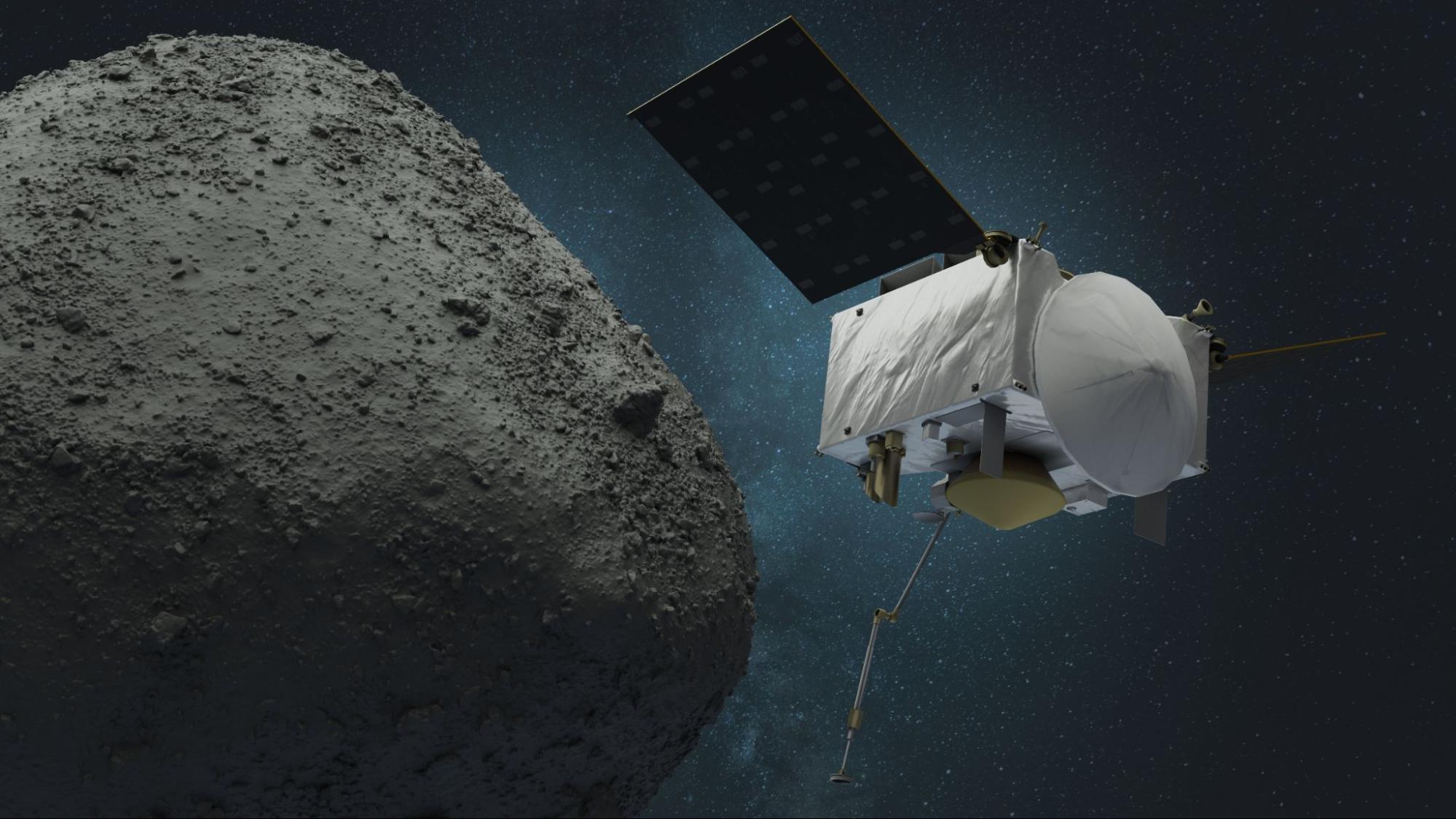 NASA’s OSIRIS-REx mission Approaching Asteroid Bennu
Not all valuable asteroids are made of metal. Bennu is a carbon-rich space rock loaded with water and complex organics, including amino acids and carboxylic acids. Located close to Earth, Bennu is about 500 meters across and has become famous thanks to NASA’s OSIRIS-REx mission.
Why is Bennu valuable? Water in space is like gold for explorers. You can drink it, split it into hydrogen and oxygen for rocket fuel, or use it for life-support systems. Launching water from Earth costs thousands of dollars per kilogram, so mining Bennu could make large-scale operations in orbit far more affordable. Some estimates put the in-space value of Bennu’s water at $330 trillion.
Bennu’s surface also holds organic molecules that can tell us how life’s ingredients spread across the solar system. Scientists from the University of Arizona and other institutions are studying these samples to learn more about the origins of life.
Mining Bennu would require delicate handling. Its surface is a loose rubble pile, as the OSIRIS-REx team learned during sampling. Future mining techniques might involve enclosing the asteroid in a bag and heating it to release water – a method called thermal extraction.
5. Ryugu – A Treasure Trove of Organics
Japan’s Hayabusa2 mission revealed that Ryugu, another near-Earth object, is similar to Bennu. It’s a dark, carbon-rich asteroid packed with water-bearing minerals, amino acids, and even traces of carboxylic acids. These findings prove that asteroids like Ryugu may have delivered life’s building blocks to early Earth.
From a resource perspective, Ryugu is an ideal candidate for providing water and organic molecules for future space settlements. Its orbit is accessible, and the techniques tested by Hayabusa2 – like sample collection and surface impactors – could pave the way for mining techniques in microgravity.
While Ryugu’s market value isn’t hyped like Psyche’s, its real worth lies in enabling human desires for long-term space travel. Instead of hauling oxygen from Earth, astronauts could extract it from Ryugu’s minerals. That’s why scientists and engineers consider it a cornerstone in the plan for large-scale operations beyond Earth.
6. Ceres – The Water Giant of the Asteroid Belt

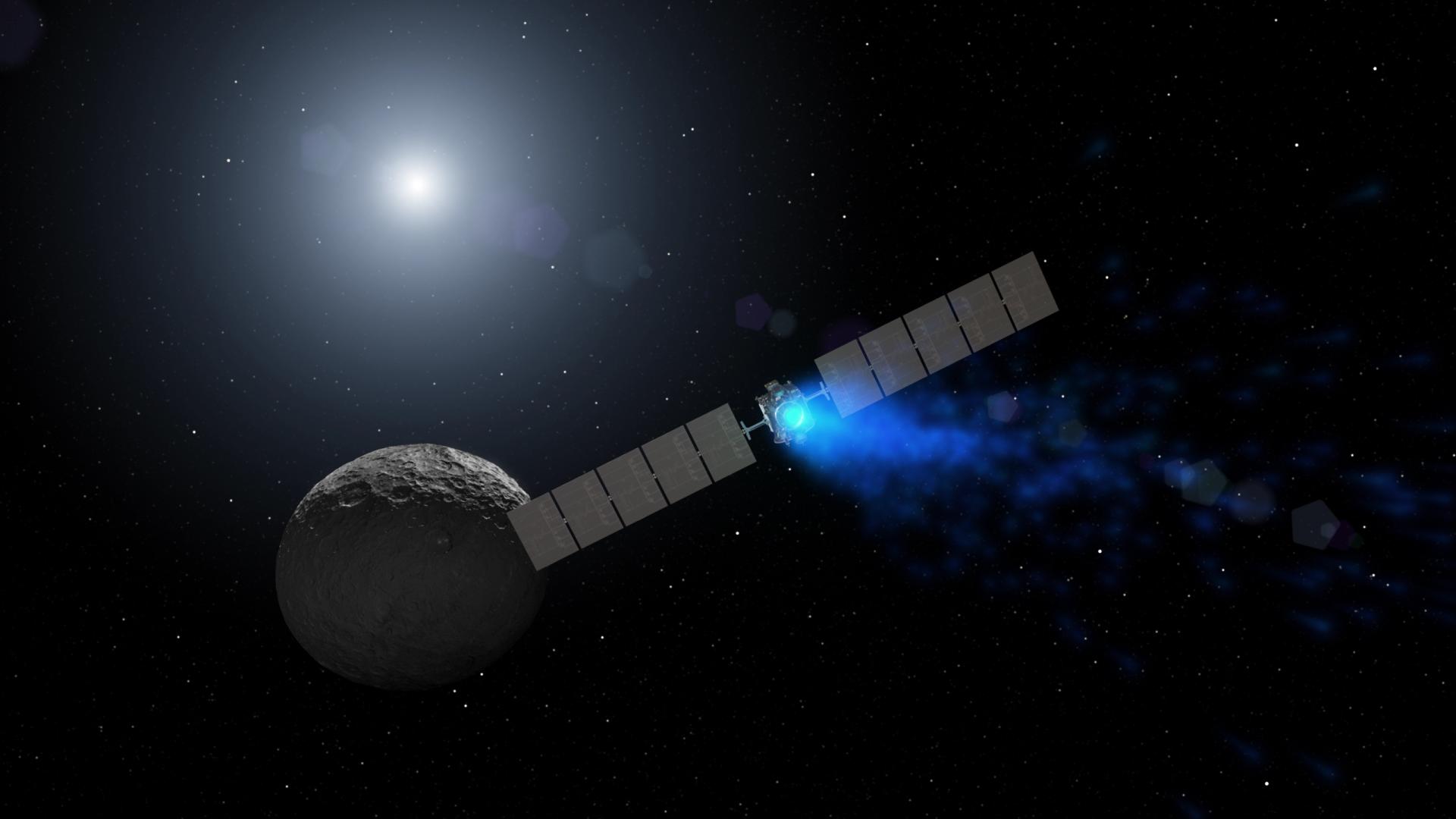
Finally, we can’t ignore Ceres, the largest body in the asteroid belt and technically a dwarf planet. Ceres contains vast amounts of water ice, possibly more than all the fresh water on Earth. NASA’s Dawn mission revealed bright salt deposits on its surface, hinting at underground brines.
If future explorers establish refueling stations or bases in the asteroid belt, Ceres could be the ultimate source of water. Its low gravity makes launching resources easier than from Earth, and its stable orbit makes it a strategic hub for missions to Mars, the moons of Jupiter, or even the Kuiper Belt.
Mining Ceres would require different mining techniques than metallic asteroids – likely large-scale thermal extraction of ice. But the payoff could be enormous for building a sustainable space economy.
The Biggest Challenges in Asteroid Mining
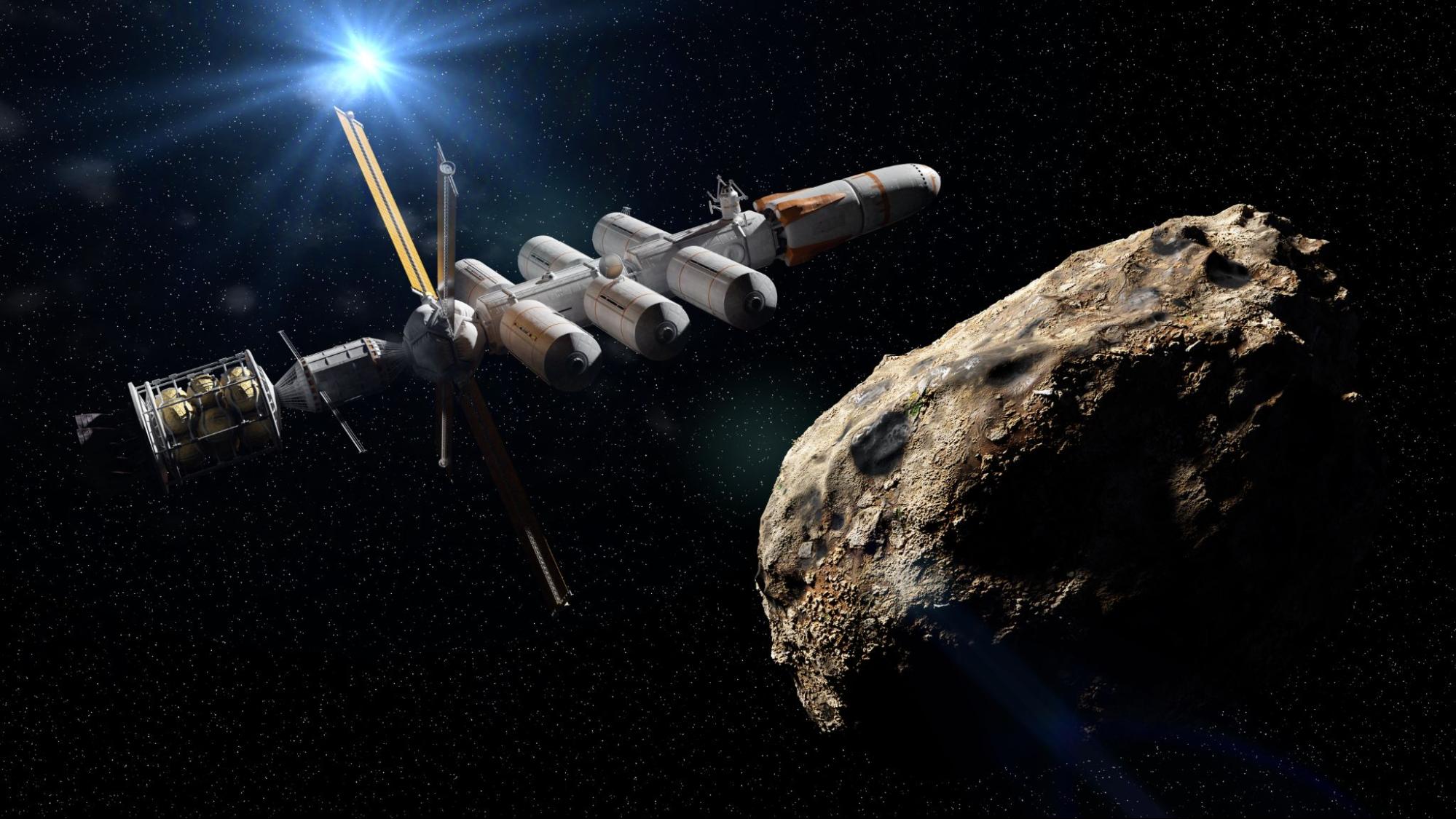
It’s easy to get excited about trillion-dollar price tags, but mining a space rock is nothing like mining on Earth. In fact, it’s one of the hardest engineering challenges humanity has ever attempted. Let’s see just some of the most important challenges we must face:
1. Distance and Timing
Even the so-called “near-Earth” asteroids are millions of kilometers away. Getting there takes years, careful planning, and cutting-edge propulsion systems. Targets in the main asteroid belt or beyond? That’s an even longer journey.
2. Working in Microgravity
On Earth, miners can lean on the ground for stability. In space? Push too hard on a drill, and you’ll drift off into nothing. Equipment has to anchor itself to a surface that barely has any gravity. Think harpoons, clamps, or nets – not shovels.
3. A Brutal Environment
Extreme heat and cold, radiation, and space weathering make asteroid mining far from friendly. Fine dust clings to everything, and the vacuum of space doesn’t forgive mistakes. Every tool must be designed to survive where humans can’t easily go.
4. Technology That Doesn’t Exist Yet
Ideas like thermal extraction, electrostatic separation, and automated mining systems sound great – but right now, they’re still mostly concepts. NASA struggled to scoop just a few grams from Bennu. Imagine scaling that up to hundreds of tons.
5. Legal Gray Areas
Who owns what in space? The 1967 Outer Space Treaty says no one can claim a planet or asteroid, but some countries allow companies to keep what they extract. Not everyone agrees. Then there’s planetary protection – how do we make sure we’re not spreading contamination or altering bodies that could hold clues to life?
6. Economics
Flooding Earth with platinum might sound amazing… until the price crashes and no one profits. That’s why experts expect early mining to focus on resources used in space – water for fuel depots, oxygen for habitats – rather than hauling metal back home.
Despite these obstacles, progress is happening. Each mission – doesn’t matter if it’s NASA’s Psyche spacecraft, Japan’s Hayabusa2, or ESA’s planned probes – teaches us how to work in this new frontier. It won’t happen overnight, but space mining is no longer science fiction. The first steps are already under way.
Looking Ahead – Why It’s Worth It
So, many ask the question: why bother chasing the most valuable asteroid if it’s so complicated? Because the payoff isn’t just money – it’s freedom. Freedom from Earth’s resource limits. Freedom to explore further, stay longer, and build bigger than we ever could if we kept hauling everything from our planet.
Water from Bennu could fuel rockets to Mars. Metals from Psyche could build huge orbital stations without a single Earth launch. These aren’t wild dreams – they’re the logical next steps if we want a thriving space economy.
Of course, it’s going to take new tech, smart mining techniques, and cooperation under evolving space law. One thing’s certain: every new asteroid discovery changes the way we imagine our future in space. Those gray, distant rocks aren’t just leftovers from the dawn of the solar system.
They’re the first steps toward the next chapter of human history.
And maybe, just maybe, the first person who figures it out won’t just be a miner – they’ll be a pioneer.