
In a bold step toward transforming the Moon into humanity’s next resource frontier, Seattle-based space resources startup Interlune has announced a significant milestone in its mission on May 7th, 2025. It unveiled the first full-scale prototype of its lunar excavator. This high-performance, autonomous machine is engineered to extract helium-3, a rare isotope that could power future clean fusion energy.
This announcement, made alongside industrial manufacturing partner Vermeer Corporation, marks a historic milestone not just for lunar mining but for the broader ambitions of space-based energy independence and commercial resource utilization beyond Earth. With the unveiling of the prototype, Interlune brings us one step closer to turning science fiction into industrial reality, marking a pivotal step toward commercial lunar resource extraction.
A Collaborative Engineering Feat
The excavator prototype results from a collaboration between Interlune and Vermeer, a company with a 75-year history in agriculture and industrial equipment manufacturing. Vermeer CEO Jason Andringa has joined Interlune’s advisory board, bringing extensive experience in engineering and leadership. The partnership aims to develop novel excavation equipment and technology for use in space and on Earth.
“When you’re operating equipment on the Moon, reliability and performance standards are at a new level,” said Rob Meyerson, Interlune co-founder and CEO. “Vermeer has a legacy of innovation and excellence that started more than 75 years ago, which makes them the ideal partner for Interlune.”
Why the Moon? The Promise of Helium-3
The Moon may be a lifeless rock on the surface, but it holds billions of dollars’ worth of potential beneath its dusty regolith. Among the most prized lunar materials is helium-3, a light, non-radioactive isotope of helium carried by the solar wind and trapped in the Moon’s upper soil layers over billions of years.
On Earth, helium-3 is vanishingly rare. But on the Moon, it may exist in concentrations up to 20 parts per billion – enough to fuel nuclear fusion reactors capable of delivering immense energy without the radioactive waste that plagues current nuclear technology. That dream has fueled decades of speculation, but now, Interlune aims to make it tangible.
“Helium-3 has long been called the ‘holy grail’ of fusion fuel,” says Rob Meyerson, Interlune’s co-founder and former president of Blue Origin. “But to use it, you have to get it – and that’s what we’re doing now. We’re building the tools to harvest it from the Moon.”
Helium-3 holds promise as a fuel for nuclear fusion reactors, offering a potential source of clean and sustainable energy. Additionally, helium-3 also has applications in quantum computing, medical imaging, and national security.
A New Breed of Space Excavator

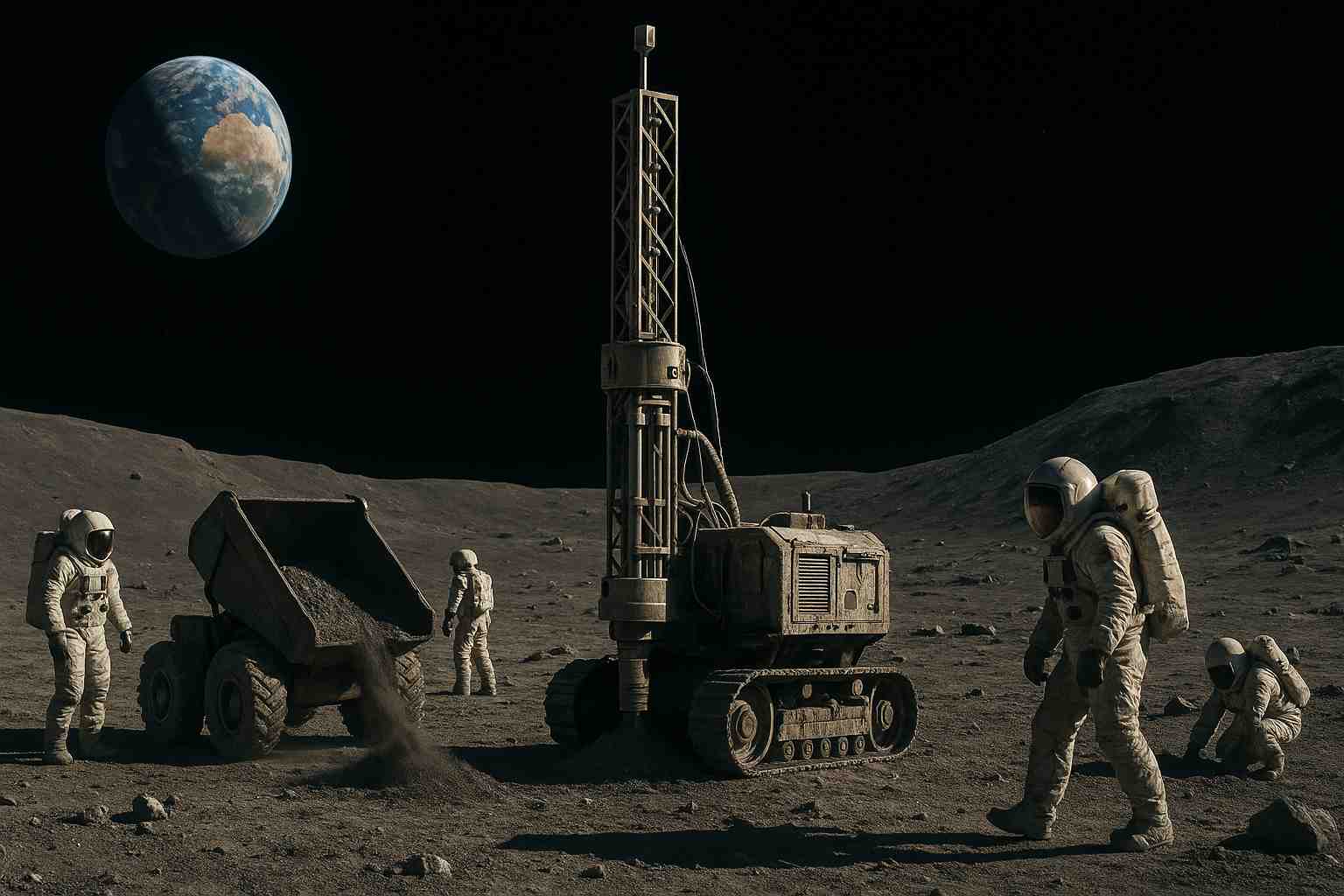
Interlune’s newly unveiled prototype is no sci-fi fantasy. Engineered in collaboration with Vermeer, as a 75-year-old leader in trenching and excavation machinery, the full-scale excavator is built to withstand extreme lunar conditions – abrasive dust, ultra-low gravity, and wide temperature swings.
The system is designed to process up to 100 metric tons of regolith per hour, operating autonomously with minimal energy use. That’s no small feat: energy efficiency and reliability are critical for lunar missions, where payload mass is expensive and maintenance is impossible. The excavator is just the first step in Interlune’s planned four-stage system for lunar helium-3 harvesting:
- Excavate lunar regolith
- Sort for helium-3-rich particles
- Extract volatile gases, including helium-3
- Separate and package helium-3 for shipment back to Earth
With patent-pending innovations in energy-efficient excavation and volatile extraction, Interlune’s approach is designed not only for space but to outperform on Earth as well.
“Space isn’t forgiving,” says Meyerson. “This system must work autonomously, efficiently, and without fail. That same precision and ruggedness makes it valuable here on Earth, too.”
What makes helium-3 truly game-changing isn’t just its exotic origin but what it could unlock back on Earth. Fusion reactors that run on helium-3 and deuterium could deliver abundant, clean power without carbon emissions or nuclear waste.
“Helium-3 fusion offers the dream: safe, scalable energy with no meltdown risk and zero radioactive waste,” says Dr. Anjali Rao, a physicist at the International Fusion Energy Alliance. “It’s not hype, it’s physics. What’s been missing is the supply chain.”
And that’s where Interlune is poised to lead.
From Moon Dust to Global Impact: Future Plans
The Interlune company has already secured purchase agreements with the U.S. Department of Energy’s Isotope Program for a small quantity of lunar-extracted helium-3 (three liters) by 2029. In parallel, Maybell Quantum, a leading U.S. quantum computing infrastructure company, has committed to buying thousands of liters of lunar helium-3 annually between 2029 and 2035 for use in ultra-cool refrigerators essential for quantum devices.
These aren’t speculative letters of intent. They’re early footholds in what could become a billion-dollar lunar economy. The company also plans to send a prototype version of its extractor to the Moon in 2027 to demonstrate its ability to locate and isolate helium-3. By 2029, Interlune aims to establish a pilot plant on the lunar surface to begin processing and shipping helium-3 back to Earth.
Interlune’s roadmap is ambitious. To sum it up:
- 2027: Deploy a prototype extractor to the Moon for field testing
- 2029: Launch a pilot lunar helium-3 plant to begin real extraction and return
- Early 2030s: Ramp up commercial shipments of helium-3 to Earth
While Interlune doesn’t aim to solve the entire fusion equation, it is solving one of the hardest parts: how to reliably extract and transport the rare fuel to Earth.
Challenges and Outlook: A Giant Leap Toward Harvesting Helium-3 from the Moon
Of course, the journey won’t be easy. While the potential of lunar helium-3 is significant, logistical and financial challenges still remain. Launching heavy equipment to the Moon, building on-site infrastructure, and safely returning helium-3 will require not only engineering mastery but also global cooperation and a clear legal framework for space resource rights. The cost of harvesting helium-3 and delivering it to Earth could also be prohibitive in the immediate future.
“It’s a moonshot in every sense,” says Dr. Ian Crawford, a planetary scientist at Birkbeck, University of London. “But this is how great revolutions begin – not with grand speeches, but with machines built to dig.”
Nevertheless, Interlune’s advancements represent a significant step toward the commercialization of space resources. As the company continues to develop its technology and infrastructure, the prospect of utilizing lunar helium-3 for clean energy and advanced technologies becomes increasingly tangible.
The Bigger Picture: Lunar Industry Is Taking Shape
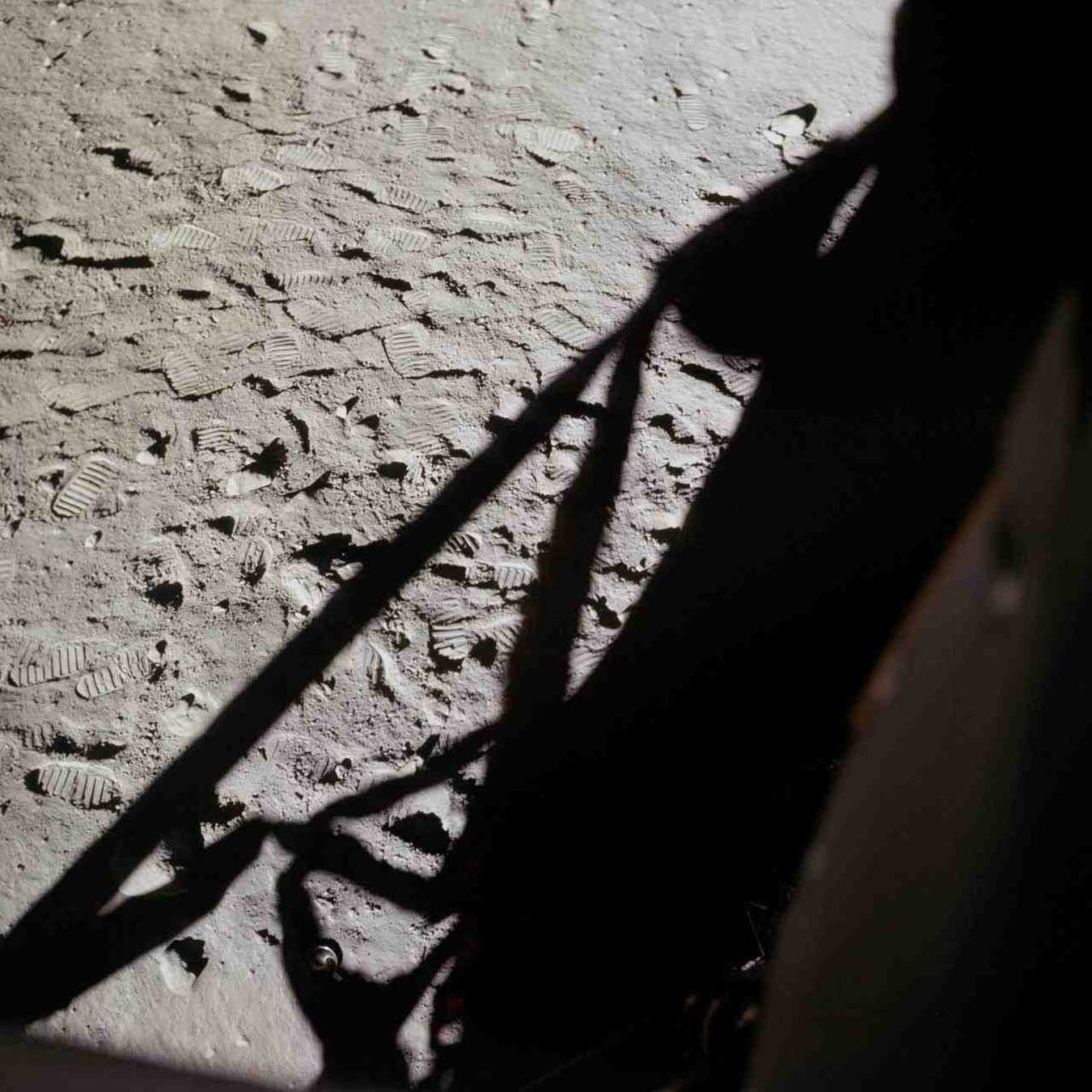
Interlune is part of a growing constellation of startups, agencies, and nations targeting the Moon for more than exploration. NASA’s Artemis Program, China’s Chang’e missions, and upcoming private landers are all building toward a lunar economy – one where extracting water, metals, and now helium-3 will power new industries both on and off Earth.
“We’re not just going to the Moon to explore anymore,” says Meyerson. “We’re going to stay, to build, and to thrive.”
With Interlune’s excavator now fully revealed, the company has sent a clear signal to the world: lunar mining isn’t decades away, it’s already in motion. Whether Interlune becomes the first to return helium-3 to Earth or not, it has already achieved something historic: it has made lunar mining feel real, mechanical, and achievable.
And if their machines can one day power fusion reactors that light up cities without smoke or waste, we may look back on this moment – the unveiling of a dusty, rugged prototype in a lab in Seattle – as the first shovelful of humanity’s clean energy future.