
Mining will be as fundamental to humanity’s future in space as it was during past frontiers on Earth. Asteroids, the Moon, and Mars harbor vast quantities of metals, minerals, and even water, but sending heavy machinery and fuels from Earth is prohibitively expensive. This challenge calls for innovative, lightweight, and efficient solutions. Enter biotechnology: scientists are learning to harness tiny lifeforms as space miners.
On Earth, “biomining” microbes already extract copper, gold, and rare earth elements from low-grade ores in an energy-efficient, eco-friendly way. Now, NASA and its partners are testing whether these microbes can work in microgravity and vacuum. As BioAsteroid Investigator and Professor at the UK Centre for Astrobiology, Charles Cockell, notes, “microbes have been mining elements for 3.5 billion years, long before humans came along”.
Can we get them to work in space, too?
BiomiTiny Lifeforms, Big Promises
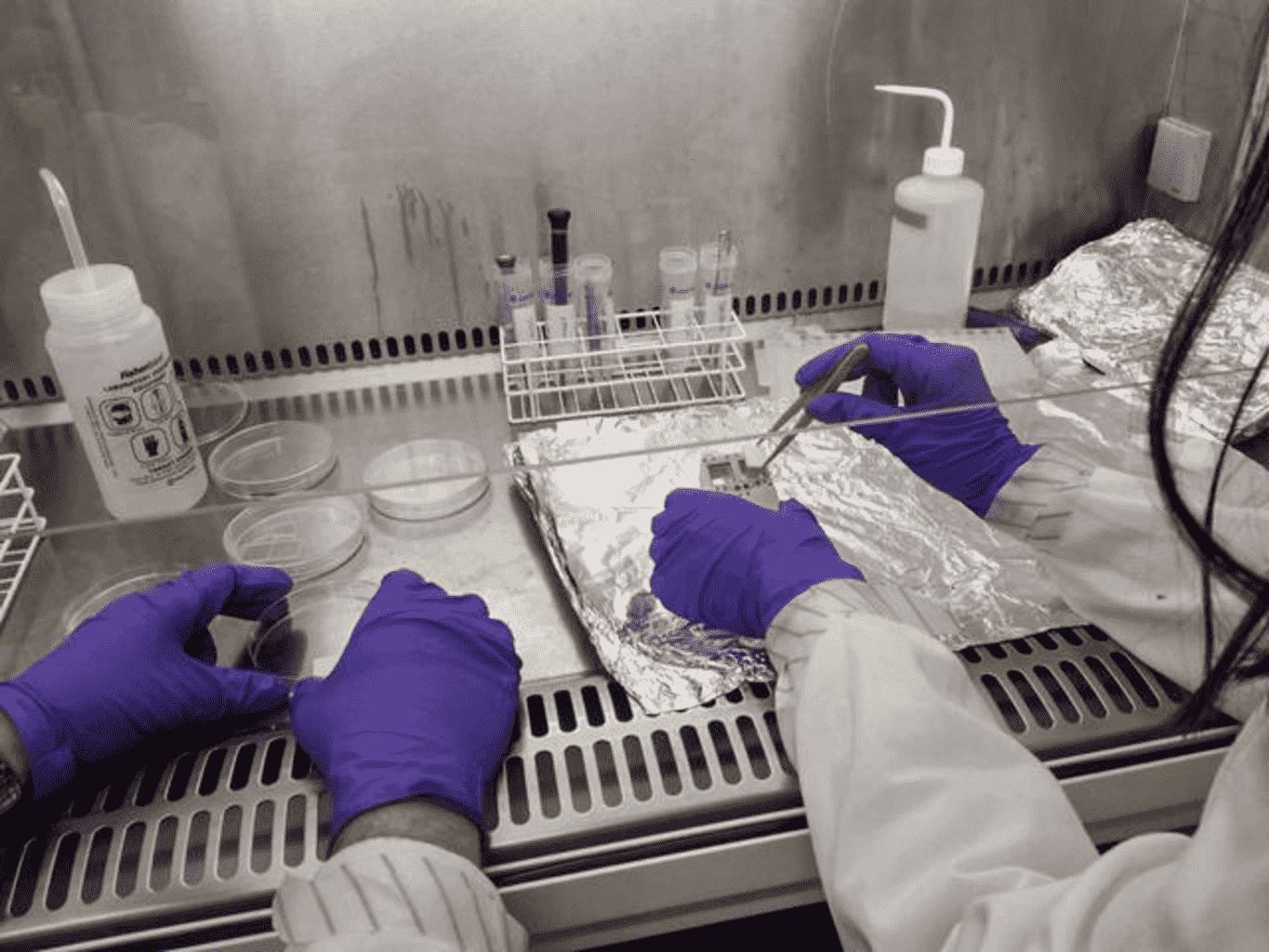 Scientists integrating a bioreactor for the BioRock experiment.
Biomining exploits the natural metabolism of bacteria or fungi: they produce acids and redox compounds that dissolve minerals, releasing metals into solution, without the need for harsh chemicals or high energy. Biomining typically targets pyritic ores using iron-oxidizing bacteria like Thiobacillus ferrooxidans, Leptospirillum ferrooxidans, and Acidimicrobium ferrooxidans.
These microbes oxidize the iron in pyrite, producing iron compounds that react with metal sulfides to create sulfuric acid. This acid then speeds up the breakdown of the rock, releasing valuable metals. Alongside these bacteria, species from the Sulfobacillus and Acidianus genera also contribute to biomining efforts. Biomining on Earth uses these microorganisms to extract valuable metals like copper, gold, zinc, uranium, nickel, aluminium, cobalt, and rare earth elements from low-grade ores.
Why? Because this method is more environmentally friendly and cost-effective compared to traditional mining techniques like smelting. By harnessing these tiny miners, the mining industry reduces waste and pollution, making it a sustainable approach that could be adapted for use beyond Earth. Could we simply ship a vial of microbes to the Moon or an asteroid and have them chew rocks into useful stuff? Early results look promising.
But before we get into the data, let’s see how this could help support space missions.
Why Biomining? The Significance of Microbes as Miners
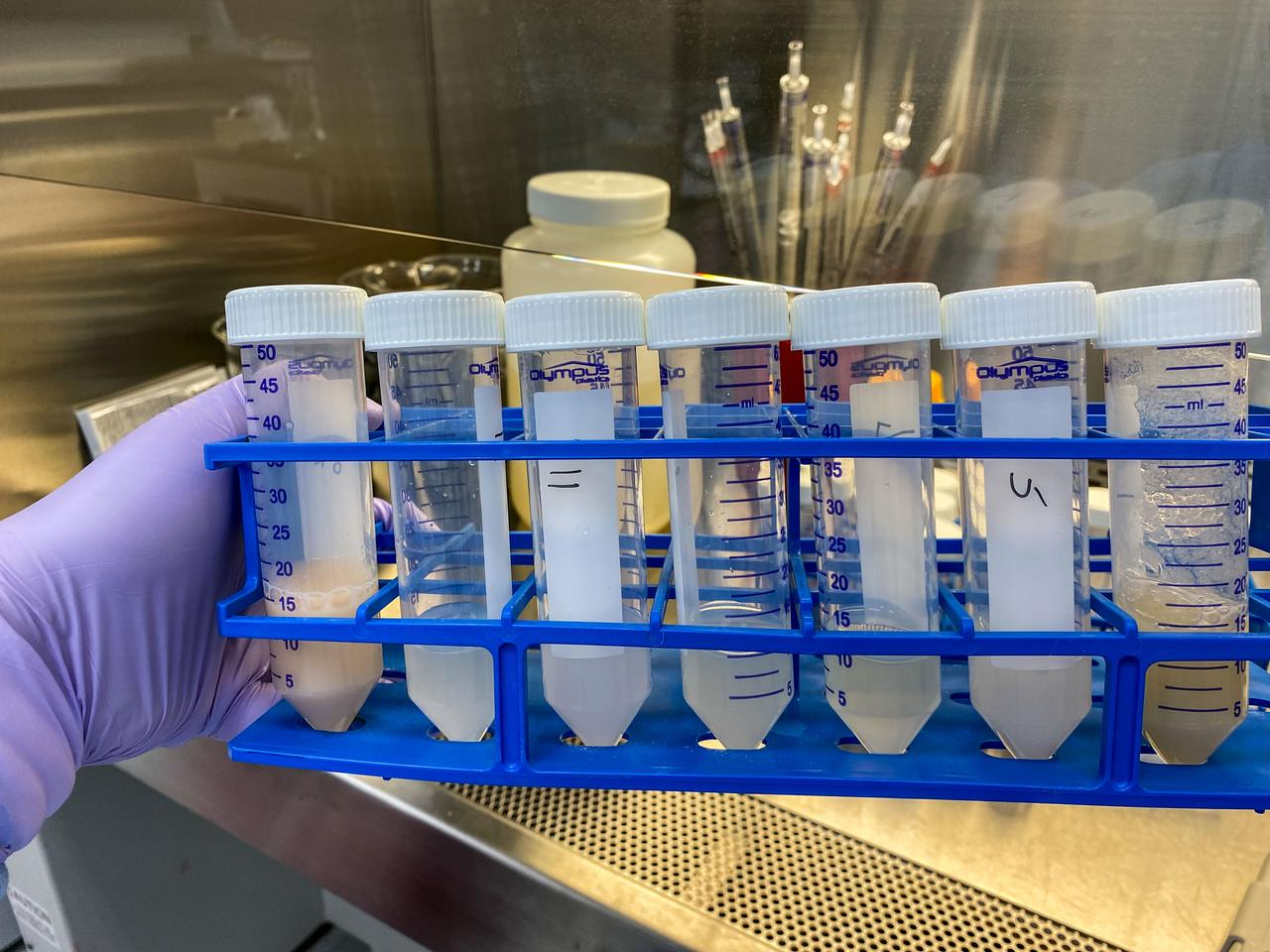 Preflight image of a rack of tubes containing soil samples that have been inoculated with a model soil consortium for the Dynamics of the Microbiome in Space (DynaMoS) investigation, examines how microgravity affects metabolic interactions in communities of soil microbes.
Imagine an astronaut on Mars, grinding Martian soil into a vat and seeding it with bacteria. The microbes, hungry for nutrients, would dissolve and leach metals out of the rock. In effect, they become living pickaxes and refineries. On Earth today, about 20–30% of global copper and 5% of global gold come from biomining, with far less chemical waste than traditional smelting. In space, this could turn barren regolith into a treasure trove.
The implications of successful biomining are huge. As humanity prepares to return to the Moon with Artemis and establish bases on Mars, relying solely on supplies from Earth is simply not manageable. Launching materials, whether water, metals, or building components, into space is incredibly expensive and limited by rocket capacity. To overcome the current biggest hurdles and provide sustainability and support for long-term missions, astronauts will need to use resources found where they are – this is the essence of In-Situ Resource Utilization (ISRU).
ISRU means harvesting, processing, and recycling local materials like lunar soil or Martian regolith to produce water, oxygen, fuel, construction materials, and more. Biomining fits perfectly into ISRU because it offers a low-energy, lightweight way to extract metals and minerals directly from these planetary surfaces. Instead of hauling heavy mining machinery from Earth, crews could use microbes to dissolve metals from rocks and soil, producing essential materials like iron for tools or rare earth elements for electronics right on-site.
This not only slashes mission costs but also enables self-sufficiency, reducing dependence on Earth and increasing the chances of long-term human presence beyond our planet. Biomining’s ability to operate in microgravity and its eco-friendly nature make it a promising cornerstone for future ISRU strategies on the Moon, Mars, and beyond.
Enabling ISRU: What Biomining Could Provide
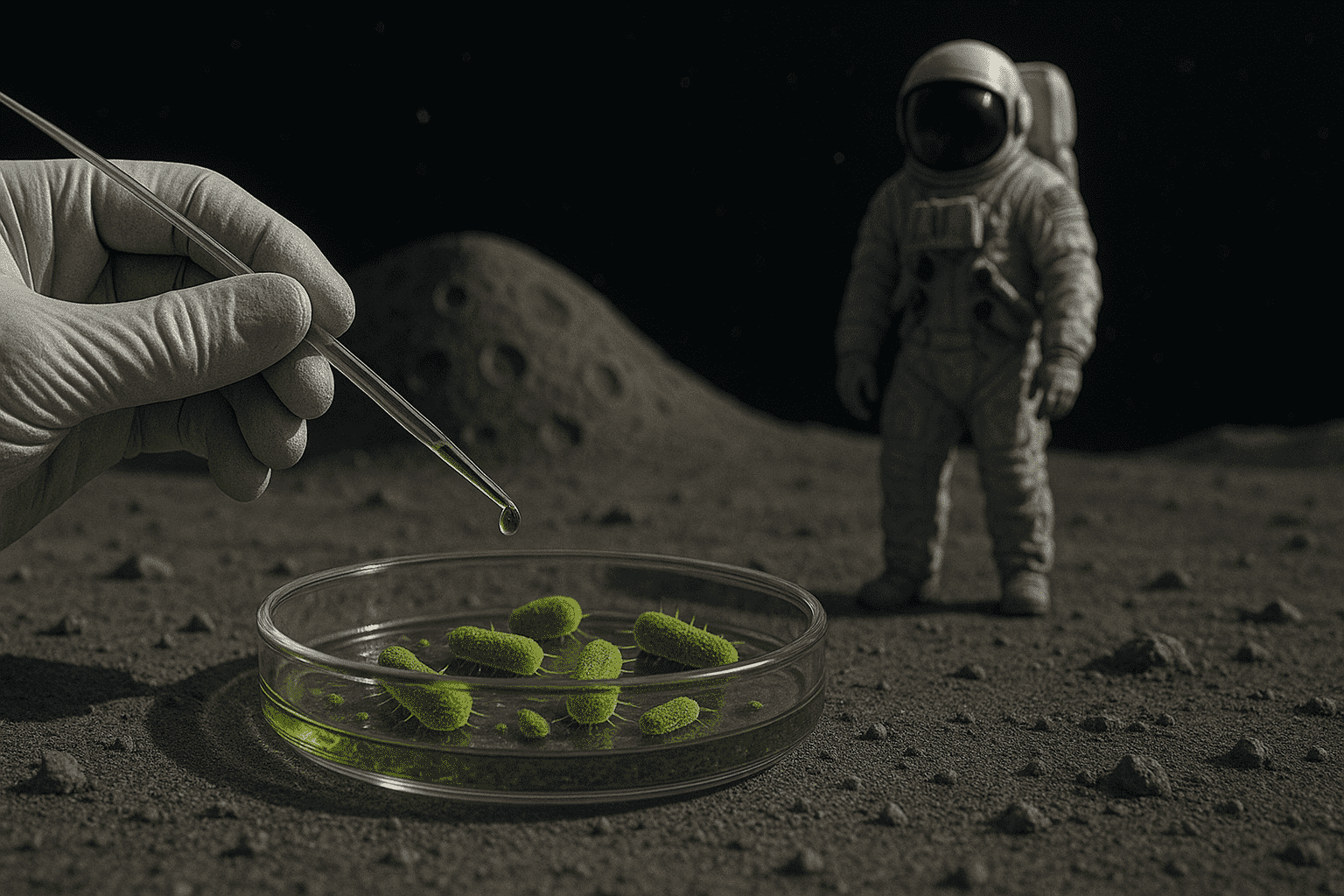
For over six decades, NASA has sent astronauts into space, and in the coming years, upcoming deep space missions will need to become more self-reliant. Biomining could be a key part of In-Situ Resource Utilization (ISRU) strategies that could provide this.
These terrestrial microbes might help us extract:
Metals for Tools and Infrastructure
Iron, nickel, copper, and even rare earths abound in lunar and Martian soils. Microbes could dissolve these out, providing building materials, wiring metals, or components for electronics. On Earth, roughly a quarter of copper production is already microbial. Imagine Mars rovers, habitats, and solar panels built from Mars-rock leached by bacteria.
Critical Trace Elements
Some asteroids and moons contain platinum-group metals and rare earth elements essential for magnets and electronics. BioAsteroid’s promising results suggest we could “grow” these valuable materials off-planet. Cockell points out that civilization has always needed elements “dug out of the crust,” from iron to the rare minerals in cell phones. In the future, space colonies could thank microbial miners for their silicon chips and solar cells.
Plant Nutrients and Soil
Microbes breaking down rocks also release nutrients like magnesium, calcium, and phosphorus – necessary for growing crops. Some studies even propose using biomining microbes to turn lunar regolith into “soil” for plants. This would let crews grow food on Mars or the Moon using nothing but native materials.
Oxygen and Volatiles
Certain minerals contain oxygen bound to metals. In theory, specialized microbes or enzymes might free that oxygen or split water from ice pockets. Lifeforms could also help extract carbon (as carbonates) or other volatiles for fuel and life support. NASA’s research roadmap explicitly mentions using synthetic biology to recover volatiles and biomanufacture compounds from CO₂ and water.
…That’s Not All
Beyond pure mining, biotechnology can power and sustain space operations in other ways. Bioregenerative life support systems (BLSS), for example, use biological processes to produce essential life-sustaining resources, focusing on four key areas: growing plants, treating water, converting solid waste, and refreshing the atmosphere.
Microbes are central to these processes, helping reduce the need to carry or resupply large quantities of materials from Earth and enabling a sustainable, regenerative environment for astronauts. For example, microbial fuel cells could generate electricity from waste or organic material, providing some power on base. Waste recycling microbes would produce clean water, nutrients, and even biogas from human waste.
NASA is also engineering microbes for on-demand production: the Space Synthetic Biology program is testing baker’s yeast on the ISS to make vitamins and antioxidants from powdered substrate. One of their goals is to make “building blocks” like a bio-cement from Martian materials.
So, microbes could not only unlock metals from rock, but turn inedible resources (such as CO₂, soil, wastewater) into fuel, plastics, medicines, or structural materials – greatly reducing launches from Earth.
How Space Biomining Works
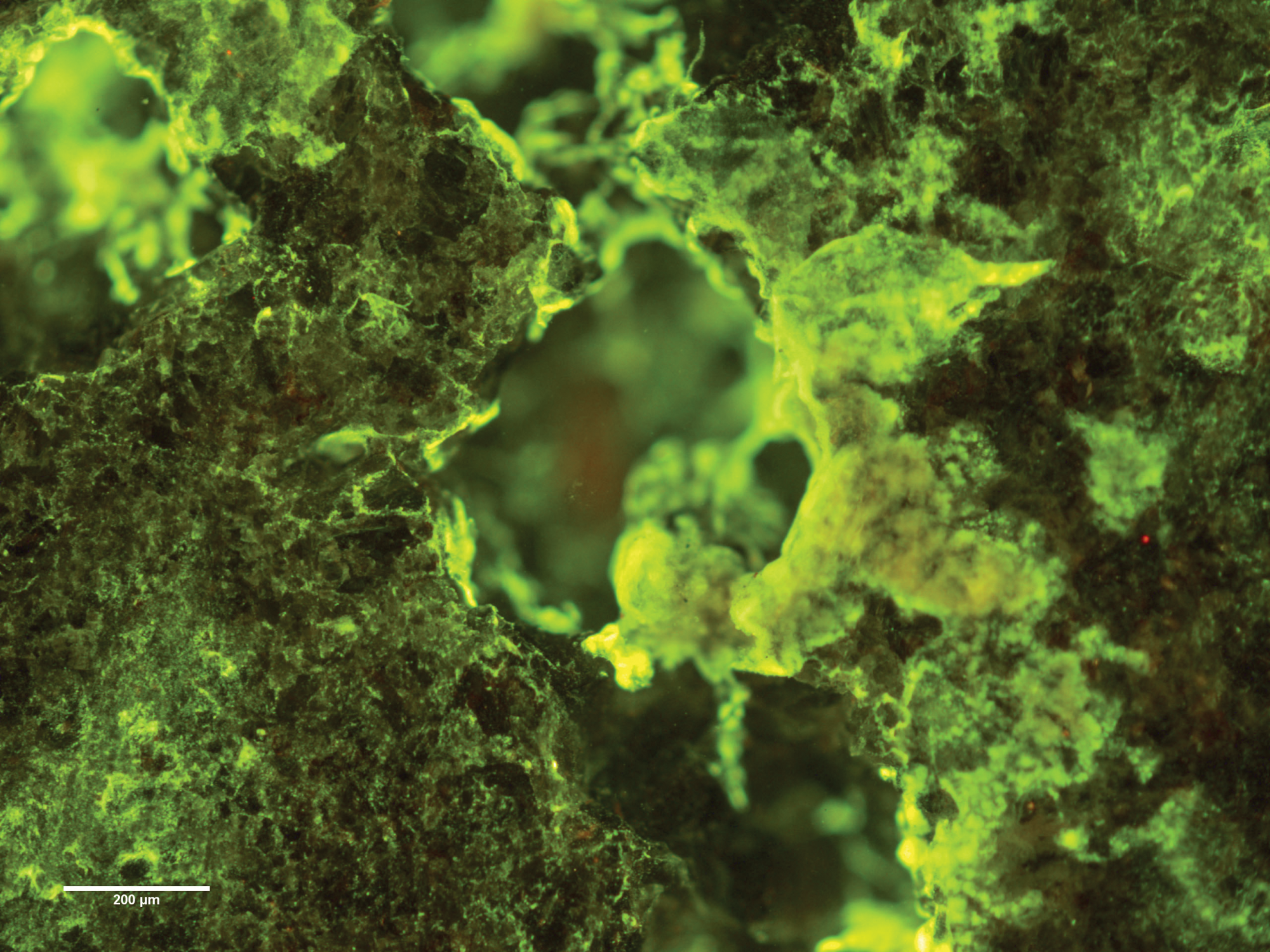 Preflight fluorescence microscopy image of microbial biofilm, Sphingomonas desiccabilis, growing on a slide of basalt rock as part of the Biorock experiment.
At its core, space biomining borrows processes used in earthbound mining. Typically, scientists select naturally hardy bacteria or fungi that thrive on mineral substrates. For metal-rich rocks, acid-producing microbes (like Thiobacillus and related extremophiles) dissolve iron and sulfur bonds, leaching out metals. In space tests, researchers chose strains known for tough environments and easy growth.
Sphingomonas desiccabilis and Bacillus subtilis formed biofilms on basalt slides in Biorock (see image above). Tiny pumps in the bioreactors flowed nutrient media over the microbes, and after a few weeks, the fluid was analyzed to see how much metal dissolved. One might expect zero-gravity to impede microbes – maybe their biofilms float away, or fluids don’t mix. But experiments found surprisingly robust performance. Microgravity changed fluid convection and sedimentation, but microbes still grew into a sticky film on the rock.
In BioRock, NASA reported that some microbes may even perform their task better under microgravity conditions. Keith Cowing’s reports note that rare-earth extraction in space was just as effective as on Earth, and sometimes better. The results from the BioAsteroid experiment that investigated biomining in microgravity aboard the ISS (which we will get to in more detail in a bit) nuanced this: in microgravity, passive chemical leaching (no microbes) actually increased for many elements.
This means reactors must be carefully engineered: for instance, fluid circulation or bioreactor design may need tweaking to optimize contact time. Bioreactors for space mining will need special design features. Terrestrial biomining is often done in large open tanks with stirring. In orbit, reactors must be closed and compact. The ISS experiments used miniaturized “KUBIK” incubators with injectable fixative to stop the reaction at the end.
Future reactors might use rotating drums or centrifuges to simulate gravity and mix fluids. Importantly, microbes must be sustained on very little power and nutrients: often, just oxygen and a sugar feed are enough. After a run, the solution would be processed to precipitate out the metal salts, or electrowinning could recover pure metals.
Pioneering Experiments and Findings
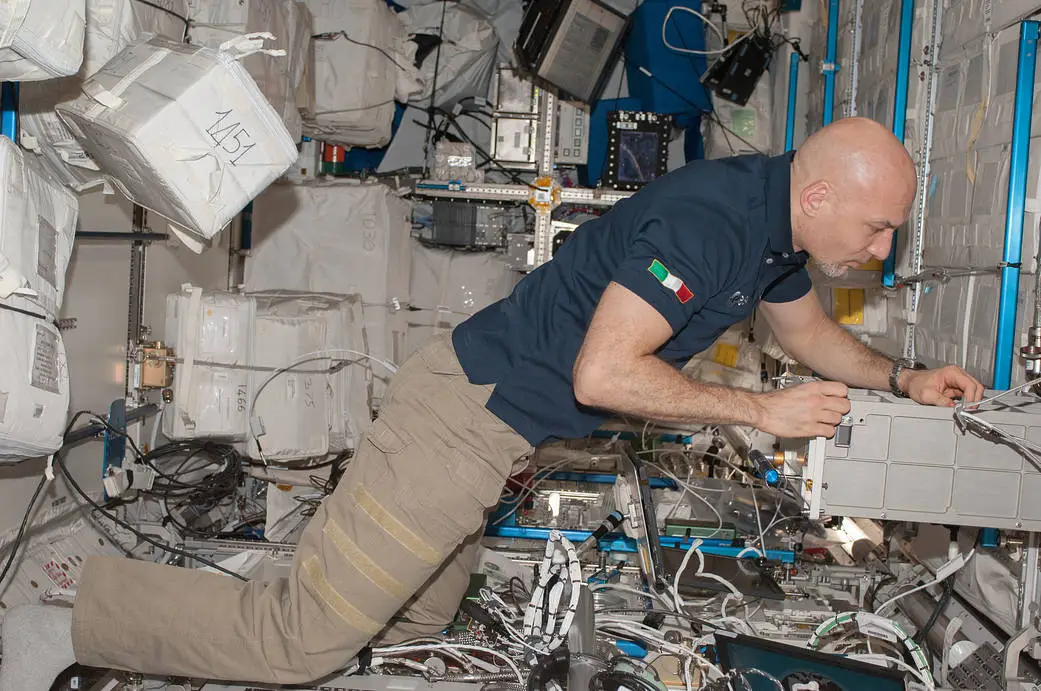 European Space Agency astronaut Luca Parmitano working in the Columbus Module laboratory of the International Space Station (ISS).
NASA and ESA have already flown biomining experiments on the ISS.
BioRock (2019, ESA)
In a project called Biorock (2019), ESA astronaut Luca Parmitano (pictured above) installed a custom bioreactor in Columbus. It contained sterilized basalt slides (a Moon/Mars rock simulant) and bacteria such as Sphingomonas desiccabilis. Over weeks, microbes formed biofilms on the basalt and dissolved rare earth elements (REEs) out of the rock.
To test microgravity’s effect, identical “bioleaching” experiments were run on Earth and on the ISS. Surprisingly, scientists found the tiny miners worked just as well in space. “The microbes were able to biomine in the same way under different gravity conditions,” said PI Charles Cockell. They successfully extracted REEs (critical for electronics) from the basalt, a core lunar and Martian mineral. These “biotic” extractions were often higher than the non-living controls, proving that life can help harvest minerals in orbit.
In fact, some microbes even performed better in microgravity than on Earth, hinting at unexpected advantages of space bioreactors.
BioAsteroid (2020–21, ESA)
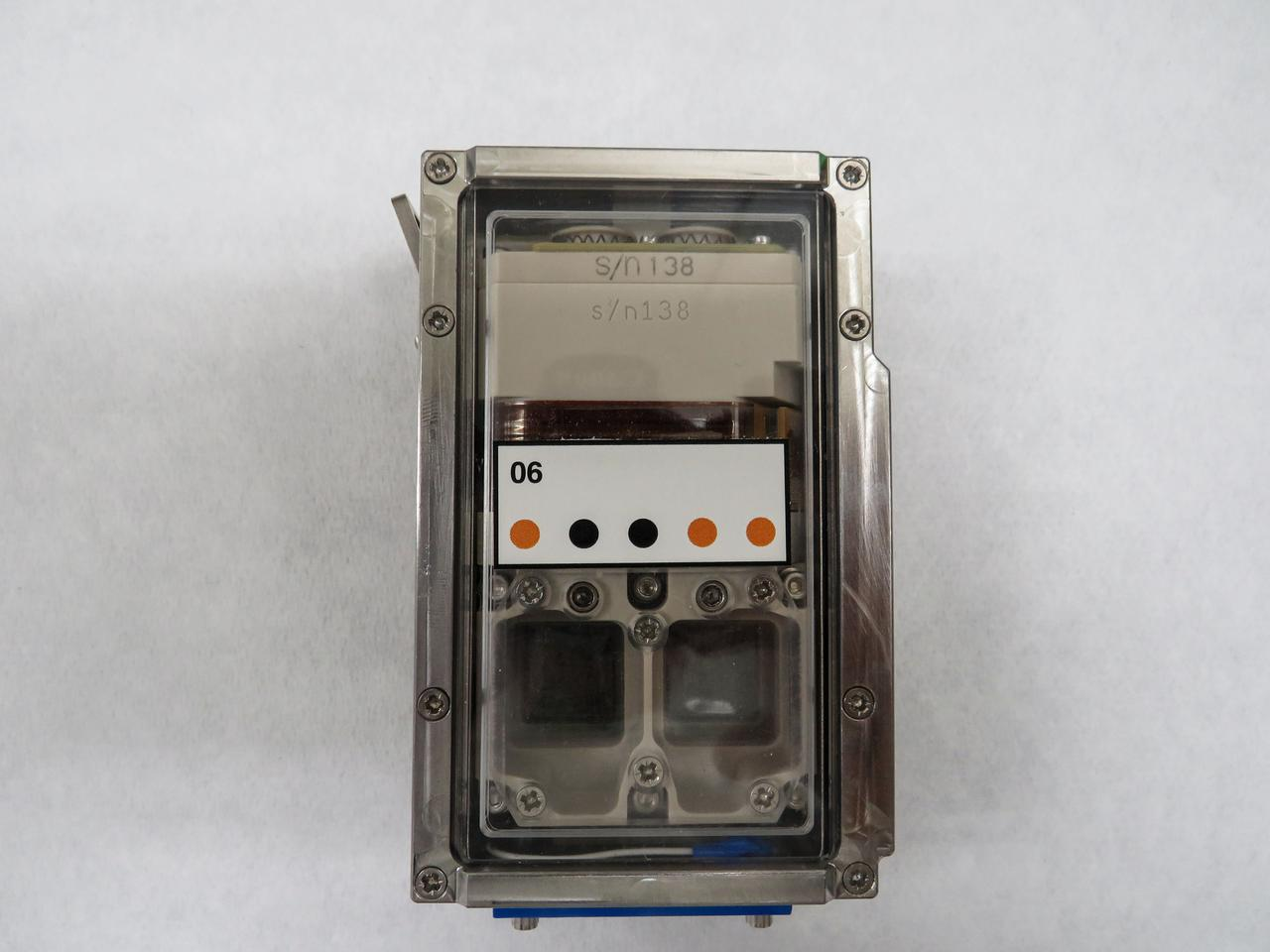 A preflight view of the BioAsteroid Experiment Unit integrated into the Experiment Container, which provides the necessary interface to the KUBIK. Each Experiment Unit has two culture chambers.
Once that first step was proven, ESA launched a follow-on called BioAsteroid to try actual space rocks, extending biomining to actual asteroid material. Twelve test chambers carried meteorite fragments (a 4.5-billion-year-old chondrite) into space along with a mix of mining bacteria and fungi. Early 2024 reports show that, indeed, microbes can leach precious metals from asteroidal material.
The fungus Penicillium simplicissimum, for example, enhanced the release of platinum, palladium, and other elements from the meteorite under microgravity by lowering pH and breaking down mineral lattices. Interestingly, the microgravity itself also increased chemical leaching even without microbes (perhaps by changing fluid convection). The upshot: a space “mining recipe” may require just the right microbes and conditions to make it efficient.
ISS Demonstrations
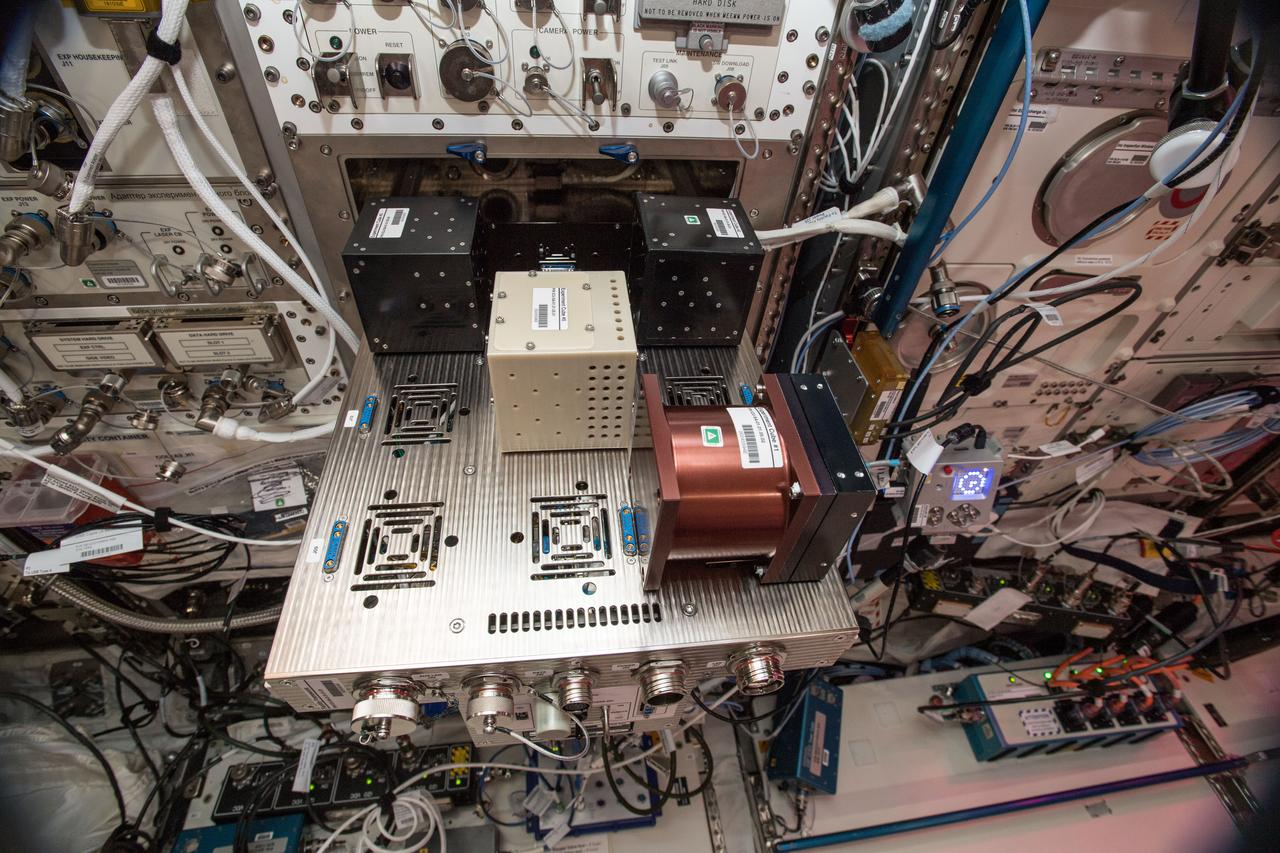 A photo of the Study of the Gravity’s Effect on Bacteria (ICE Cubes Hydra-2 Bacteria Biomining) onboard the International Space Station (ISS).
In 2020, NASA highlighted BioRock results in press releases. They noted that all three tested microbes (including desiccabilis and Cupriavidus metallidurans) extracted REEs under all gravity conditions. Vanadium (a strong structural metal) was also tested: one bacterium, S. desiccabilis, nearly tripled the vanadium extracted compared to controls. These results underscore that microbial mining can target a variety of useful metals, not just one.
What Does This Tell Us?
The outcomes of the ISS studies emphasized that space biomining could help establish a self-sustaining human presence beyond Earth. The experiments validate the “principles of a miniature space biomining reactor” and show that microbe–mineral interactions can be engineered in orbit. They also guide NASA on what to do next: test larger bioreactors, longer runs, and more microbe/rock combinations.
Beyond Mining: The Broader Impact of Space Biotech
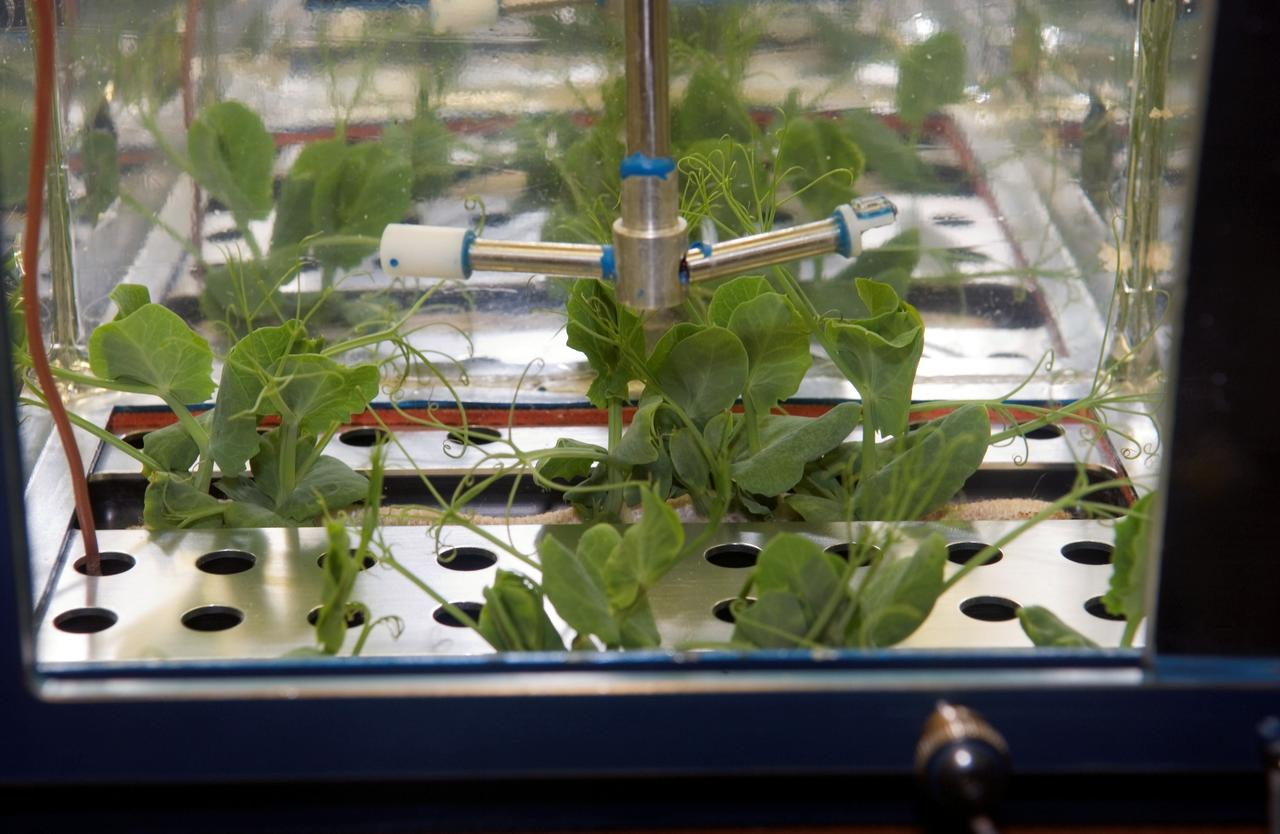 A view of pea plants growing in the Lada greenhouse as a part of the Russian BIO-5 Rasteniya-2/Lada-2 (Plants-2) plant growth experiment
Biotechnology’s influence extends beyond raw extraction. Once microbes free elements from rocks, those elements must be used. Biotech can help here, too. For example, Microbe-driven manufacturing could turn the output of biomining into end-use products. NASA’s Space Synthetic Biology (SynBio) initiative is already demonstrating this: astronauts on the ISS are growing genetically-engineered yeast that produces antioxidants and could even yield biocement to bind regolith.
In future habitats, miners and bioreactors might work hand-in-hand: microbes extract iron and silicates from moon dust, and other engineered organisms turn these into bricks, plastics, or composites. Similarly, life support can intertwine with mining. Some biomining microbes produce oxygen as a byproduct of breaking down ores containing perchlorates or water-bearing minerals. Others could generate biofuels from the carbon and hydrogen in local rocks.
In fact, a recent review notes that microbial fuel cells and biomining could both be used to sustain off-Earth outposts. One concept even combines algae and bacteria: an algae bioreactor (making biomass from CO₂) feeds a mineral-bioleaching unit, with the leftover biomass used as plant soil. Commercial and academic interest in this potential is growing. NASA’s SBIR program funded a 2012 project to use synthetic biology to engineer microorganisms to extract metals from extraterrestrial regolith.
Waste products from humans (CO₂, urine, garbage) could feed microbes, which in turn release energy and recycle nutrients. The Boeing Antimicrobial Coating investigation on the ISS tests surface coatings designed to inhibit microbial growth, with potential benefits for spacecraft and earthly applications like aircraft and healthcare settings. Other companies (past and present) have eyed biotech for space, though much is still in R&D.
What is clear is that integrating biology into space operations could radically change mission design. Launch mass could shift from rocks and oxygen tanks to vials of microbes and bioreactors. Resupply missions would focus more on spores and growth media than raw materials. Together, these approaches could form a closed-loop space economy: microbes extract resources and transform them into useful products for habitation and exploration.
Challenges We Need to Address
As promising as it is, biomining in space is not without hurdles.
- To start, the rates of extraction are currently low – milligrams of metals over weeks, which is far from industrial scale. Scaling up requires bigger bioreactors, long-term stability studies, and integration with other ISRU processes (like refining and manufacturing).
- Engineers must also protect microbial cultures from cosmic radiation and temperature extremes. Synthetic biology offers tools: researchers plan to genetically enhance microbes for radiation resistance, better leaching enzymes, or to metabolize local minerals more efficiently.
- Another hurdle is the unknowns of alien geology. Lunar soils have oxygen bound in oxides; Martian regolith contains perchlorates (toxic to many lifeforms). We don’t yet know which Earth microbes can handle these compounds. Missions may need on-site experiments (like robotic “test gardens”) to trial different strains on real rock samples before deployment.
- Policy and ethics are also under discussion: guidelines for “terraforming” rock or introducing life to other worlds are being debated internationally. Any large-scale use of biology off Earth will require careful oversight.
The Path Ahead
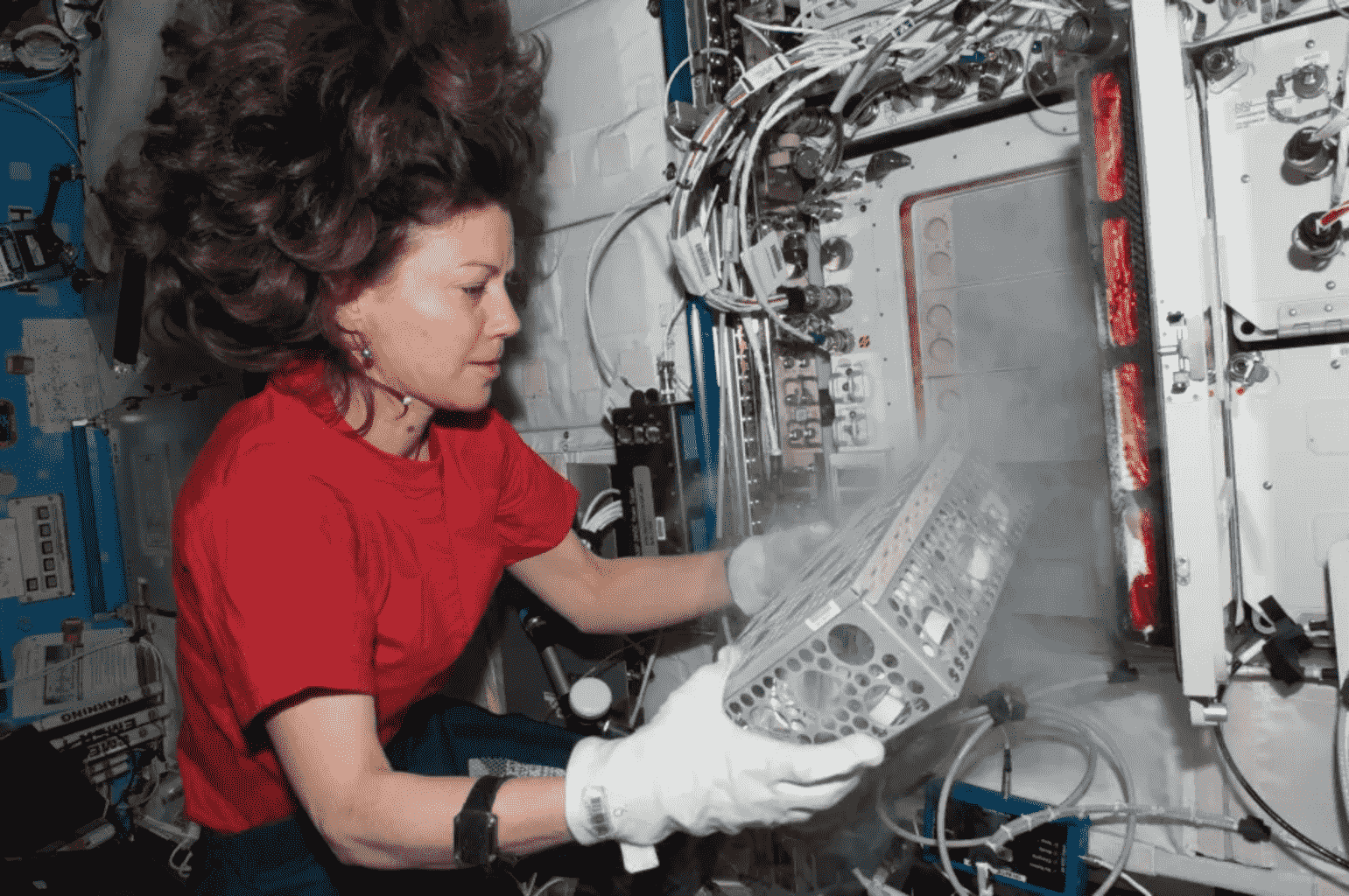 NASA astronaut Cady Coleman processes samples for the Myco Experiment.
Nonetheless, the momentum is building. NASA, ESA, and universities are expanding biomining research, and commercial ventures are forming. By combining biotechnology with robotics and traditional mining tech, future space missions could harvest asteroids for valuable platinum to fund further exploration, or turn Mars’s crust into a self-sustaining colony base. As one researcher puts it: civilization is built on the elements dug from the crust, and soon those crusts may be extraterrestrial – mined not by pickaxes, but by microbes.
Biological resource extraction could fundamentally change space operations. Instead of hauling every ounce from Earth, astronauts might rely on tiny lifeforms to do the digging and processing. This “bioeconomic” model promises lower costs and greater sustainability. Over the next decades, we will likely see bioreactor farms orbiting the Moon or Mars, quietly feeding on rock and spitting out metals, fuel, and oxygen. Biotech may help us turn science fiction’s microbial miners into reality – making the final frontier more habitable and resource-rich.