
Asteroid mining is the idea of extracting valuable minerals and volatiles (like water) from asteroids and other small bodies in space. In essence, it treats asteroids as “cosmic treasure chests” left over from the formation of the solar system. These rocky or metallic bodies range from mere pebbles to hundreds of miles across. Even a house-sized asteroid could contain metals worth millions of dollars.
Asteroids are essentially “lumps of metals, rock, and dust” – rich leftovers from 4.5 billion years of cosmic history. The concept of asteroid mining has captured attention because these rocks may harbor huge reserves of iron, nickel, cobalt, platinum-group metals, and even water ice that we could potentially use.
Why Consider Asteroid Mining?
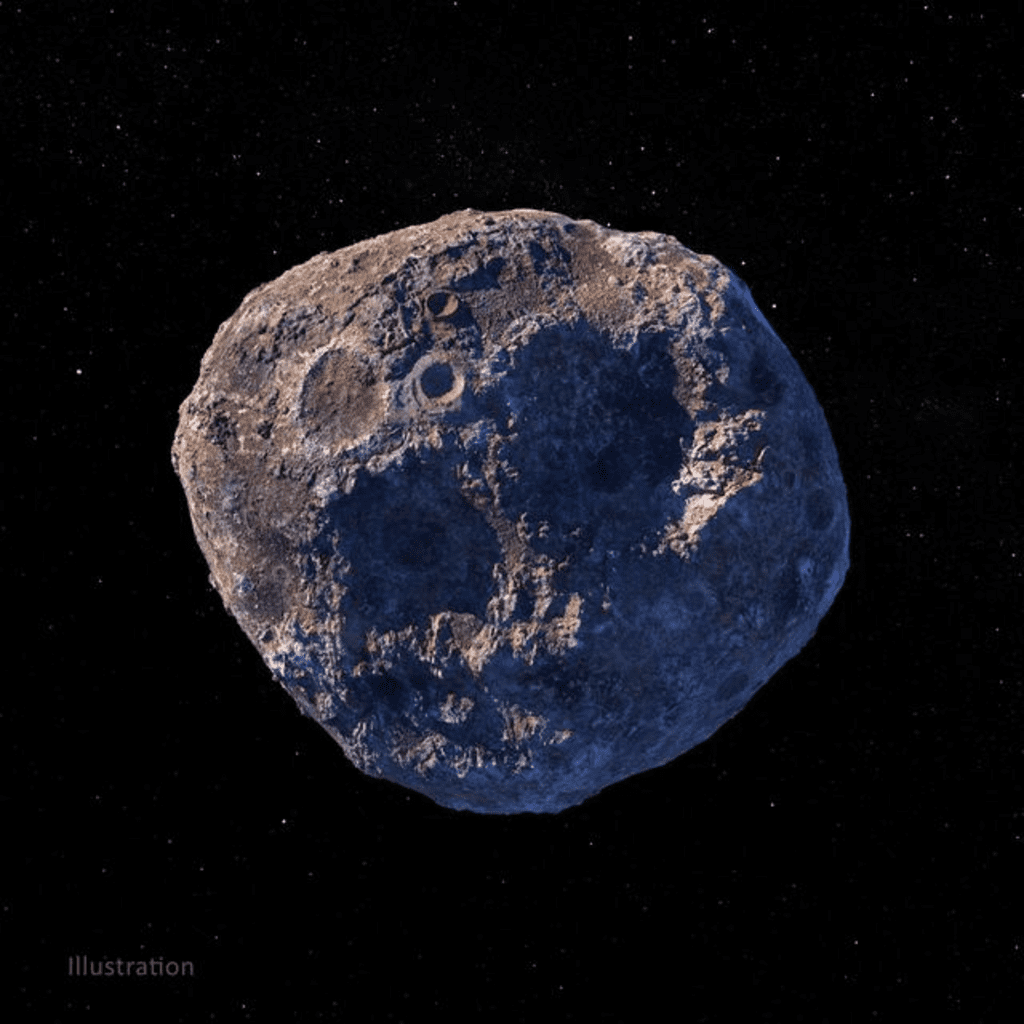 Asteroid Psyche (Illustration)
The driving idea behind this concept is two-fold.
First, asteroids may supply rare or precious materials (like platinum) that are increasingly scarce on Earth. For example, one 10-meter stony (S-type) asteroid could hold on the order of 650,000 kilograms of iron, nickel, and other metals – including around 50 kilograms of gold, platinum, and rhodium. Even smaller asteroids, if metal-rich, might be “worth millions” by terrestrial market estimates.
Second, some asteroids are rich in water and oxygen locked in hydrated minerals (so-called C-type asteroids). Water is critical for space exploration – it can support life, and can be split into hydrogen and oxygen fuel for rockets. Using asteroid water in space could save on carrying huge fuel loads from Earth. Take a look at some of the most valuable asteroids in our solar system.
In short, asteroid mining could provide fuel, life-support supplies, and construction materials in space, making deep-space missions more sustainable and less Earth-dependent.
From Water to Platinum: What’s Really Inside an Asteroid
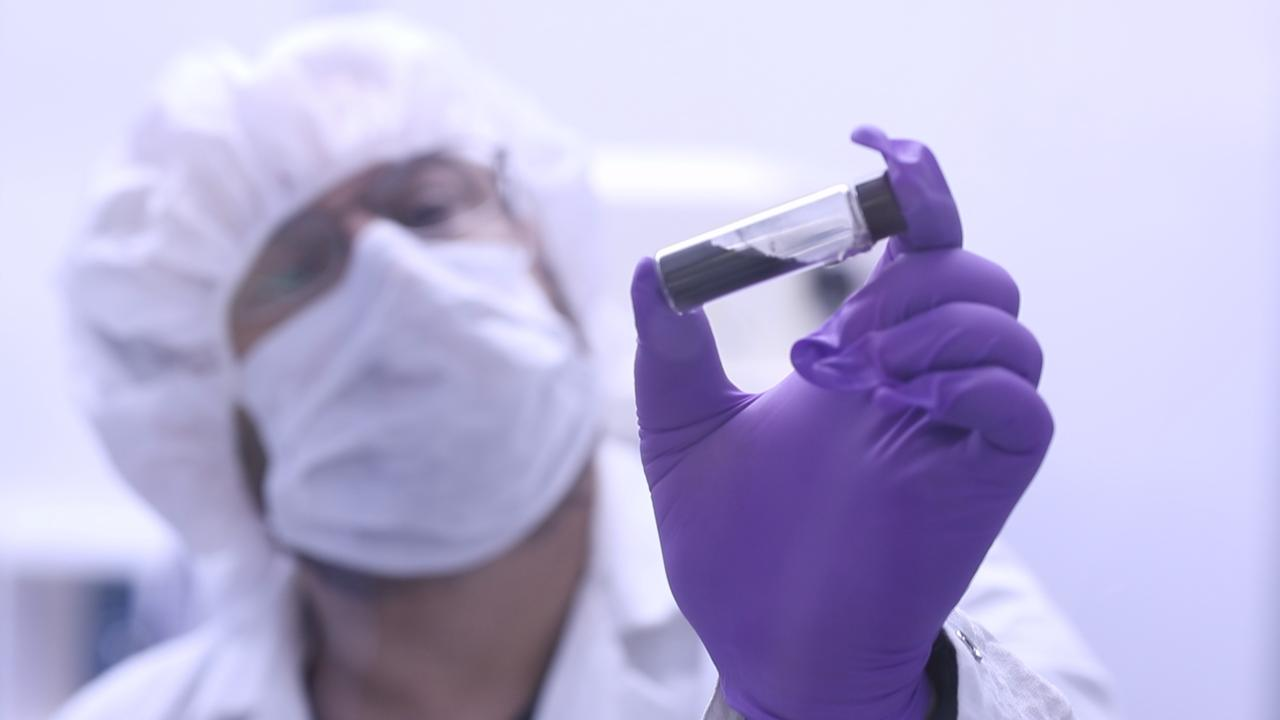 Vial with Asteroid Bennu Sample
These resources are not just theoretical. NASA’s asteroid missions (like OSIRIS-REx and Hayabusa) are already confirming that water-bearing minerals and metals are abundant. For instance, Dante Lauretta (PI of OSIRIS-REx) has highlighted that carbon-rich C-type asteroids contain water, organic carbon, phosphorus, and other life-essential elements. Stony S-type asteroids have much iron, nickel, and cobalt – plus trace gold and platinum.
Some rare metallic (M-type) asteroids could also contain ten times more metal than typical S-types. In short, an entire new source of materials exists right in our solar system if we can figure out how to use it.
- Key resources in asteroids: Water (for drinking, breathing, rocket fuel), iron/nickel/cobalt (for structure and manufacturing), and precious metals (platinum-group elements, gold, etc.).
- Potential uses: Spacecraft propellant (making fuel depots in orbit), in-space manufacturing of satellites or habitats, and possibly export of refined materials to Earth markets.
How Would Asteroid Mining Work? (Technologies & Methods)
INSERT OUR YOUTUBE VIDEO: https://www.youtube.com/watch?v=da6joCpnEBQ&t=18s
Asteroid mining still remains largely conceptual, but various methods have been proposed. The basic idea is to send robotic spacecraft to an asteroid, collect material by drilling or scooping, and then either return it to Earth or process it in situ (i.e., on-site). Some suggested approaches include:
- Surface excavation: Attach anchors or bags to the asteroid, drill or scoop surface material (regolith), and either package it or heat it. NASA has funded concepts like “optical mining,” which uses concentrated sunlight or lasers to vaporize asteroid material and capture the gases. In one design (TransAstra’s “Mini Bee” concept), a focused solar beam drills and evaporates rock inside a sealing bag, trapping water and volatiles for collection. Such optical mining could extract water and even create propellant in space.
- Magnetic separation: If the asteroid is metallic, electromagnets or permanent magnets might be used. For example, AstroForge’s plan is to have a laser melt or vaporize part of the asteroid’s surface, then use magnetic fields to pull out iron and other magnetic dust, leaving behind non-magnetic precious metals. This kind of in-situ “refinery” could separate valuable materials from bulk rock without needing to return everything to Earth.
- Mechanical mining: Traditional digging or cutting tools adapted for microgravity might scoop regolith into containers. Some concepts suggest attaching a large bag around the asteroid and shaking or vibrating it to funnel material inside. NASA’s studies also include methods like freeze-thaw cycles (heating by sunlight and cooling by shadow) to crack the rock, or small explosives to break up regolith.
- Gravity tractors or tugboats: For transportation, one idea is to attach a spacecraft to an asteroid and slowly tug it into a more convenient orbit (such as into lunar orbit or even down to Earth orbit), then mine it there. Karman+ (a startup) envisions fetching a water-rich asteroid and using its water for spacecraft fuel and even satellite refueling in geosynchronous orbit. The company invested $20M to build an asteroid-mining autonomous spacecraft.
All of these methods are still experimental. None have been tested in space for mining yet, but early research is promising. For instance, NASA’s NIAC program demonstrated optical mining in the lab. And the BASIC step of gathering any asteroid material has been done: missions like Hayabusa2 (JAXA) and OSIRIS-REx (NASA) touched, drilled, or collected dust from asteroids.
Technological Challenges
Mining equipment needs to work in microgravity and a vacuum. Anchoring yourself to a rotating, slippery rock is non-trivial. Any tools or vehicles must be highly autonomous and reliable, since communication delays limit real-time control. Power is another issue: solar panels (like the huge ones shown below) or nuclear power might be needed to run drills or lasers. For example, artist concepts show spacecraft with very large solar arrays near asteroids.
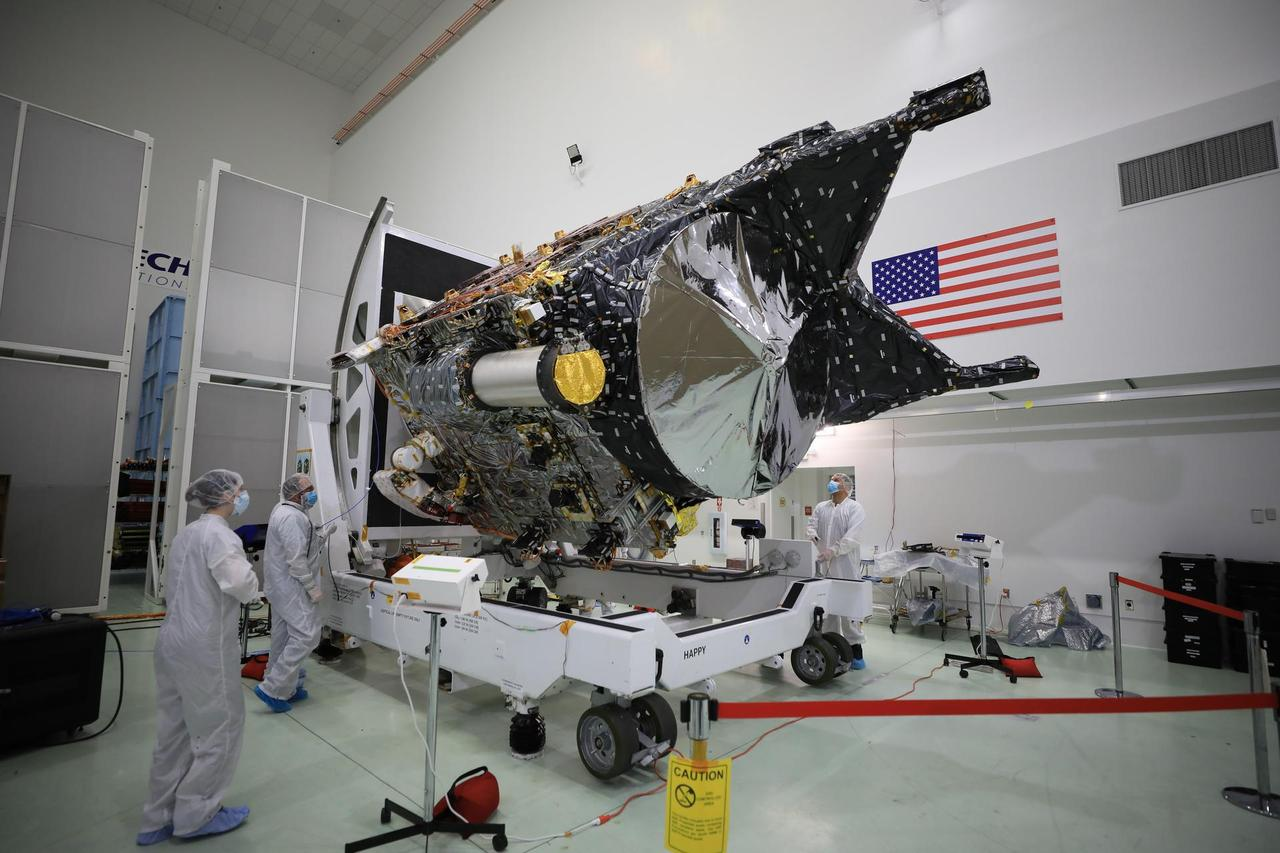
NASA’s Psyche spacecraft Launch Prep
NASA’s Psyche spacecraft (shown above) will test solar-electric propulsion for deep-space power.
In practice, bringing mined material back to Earth poses the biggest logistical hurdle. So far, only grams of asteroid rock have been returned. For instance, the OSIRIS-REx mission brought back a small capsule of sample in 2023. Hayabusa2 similarly returned 5.5 grams from asteroid Ryugu in 2020. These amounts are tiny – mostly for scientific purposes. If we wanted tons of material, we’d need very large rockets or innovative approaches. The costs are also massive.
Many analysts believe asteroid mining makes most sense if we use the material in space (for fuel or construction) rather than hauling it down to Earth’s surface. NASA itself emphasizes that extracting water to produce rocket fuel or life-support substances in space could cut launch costs dramatically.
Who’s Working on Asteroid Mining?
Interest in asteroid mining has waxed and waned. Early startups in the 2010s (like Planetary Resources and Deep Space Industries) raised headlines but eventually folded. Today, a new wave of companies and agencies is stepping in, often focusing first on reconnaissance and technology demonstration. For example:
AstroForge
A US startup aiming to mine metal asteroids. Founded in 2022, it has raised about $55 million. AstroForge built small probes like Odin (launched March 2025) to scout a near-Earth asteroid for metal. Although Odin suffered a communications failure, AstroForge quickly moved to its next mission (Vestri, planned ~2026). Their approach is high-risk/high-reward: the team built Odin in under 9 months at a cost of just $6.5 million, betting that a low-cost launch makes up for low success odds.
AstroForge’s CEO notes that older companies failed partly because in 2008 going to deep space cost ~$450 million – meaning cheap, small probes weren’t viable. In contrast, AstroForge argues that today’s Falcon 9 launches allow “$2 million satellites on cheap rockets,” enabling rapid asteroid missions. In short, AstroForge is treating asteroid prospecting much like a Silicon Valley startup: launch early, expect some failures, iterate fast.
Karman+
A Dutch startup focused on water-rich asteroids. In February 2025, it raised $20 million to fund its first mission. Karman+ plans to visit a carbonaceous asteroid and literally dig up kilograms of hydrated minerals (far more than the grams collected by OSIRIS or Hayabusa). Instead of returning material to Earth, Karman+ wants to make propellant in space. The idea is to extract water from the asteroid, bring it to orbit, and use it to refuel satellites or spacecraft.
Their spacecraft design even includes a “tow truck” mode: after mining, it could grapple and extend the life of an existing satellite by refueling it. In essence, Karman+ sees asteroid mining as an extension of the in-orbit servicing market – extracting and using space resources to keep satellites running.
Other players
Several government agencies and universities are studying asteroid mining tech. NASA’s Psyche (2023) and Lucy (2021) missions will gather data on asteroids’ composition, preparing the knowledge base for mining. NIAC-funded projects (like TransAstra’s optical mining) are maturing concepts for extracting water and propellant.
Congress has even held hearings on space resources, with lawmakers noting that asteroid mining might be “right around the corner”. And countries like Luxembourg and the United Arab Emirates have launched space-resource initiatives (even offering investor incentives) to become hubs for space mining companies.
Isn’t NASA Mining Asteroids?
Although this might cross one’s mind, no, not even NASA isn’t currently mining asteroids, but the idea is definitely being explored for the future. Right now, NASA’s focus is on studying asteroids through robotic missions to learn more about them, their composition, and their history.
Key Challenges and Feasibility
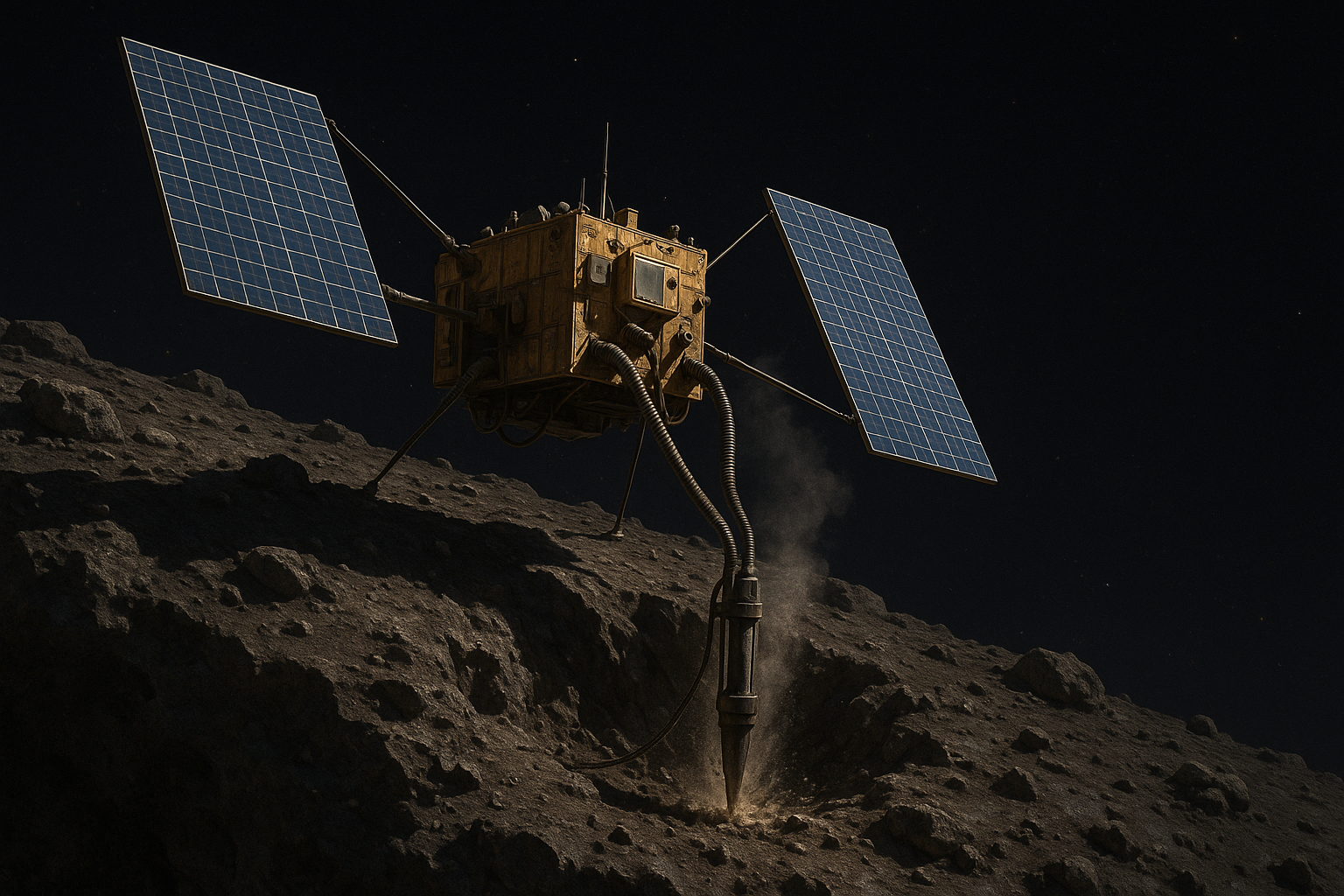
Despite the excitement, asteroid mining faces huge hurdles. Experts often emphasize that the idea is still speculative technology. NASA itself bluntly states: “No, NASA is not mining asteroids. … We actually can’t really mine asteroids yet, although many people are working on it.” In other words, all current missions are for science.
Some main challenges preventing us from digging in include:
1. Distance & Accessibility
The most resource-rich asteroids tend to be in the main belt (between Mars and Jupiter), far from Earth. Even near-Earth asteroids (NEAs) require long, precise missions. Getting there takes time and propulsion. Missions so far (Hayabusa, OSIRIS) have taken years to reach their targets. Any mining spacecraft must operate semi-autonomously, often without a human pilot.
2. Low gravity & Mobility
Asteroids have microgravity. Drilling or walking on a tiny rock is like mining on a ball of pebbles. Spacecraft might spin the asteroid to throw dust off, or anchor themselves with harpoons or drills. Without gravity, debris floats away easily. Innovating mobility (hopping rovers or anchoring tethers) is a major engineering problem.
3. Scale & Yield
Even a “metal-rich” asteroid may yield only small amounts of precious metal relative to the effort. For example, NASA notes that a 10-meter metal asteroid might have dozens of kilos of platinum. That’s valuable, but transporting it to Earth requires still hundreds of millions in launch costs.
In 2013, NASA warned that current mission costs (hundreds of millions to billions) mean mining for Earth-market metals isn’t profitable yet. In short, cost is a showstopper: launch costs must drop dramatically (e.g., reusable rockets like SpaceX’s Starship) before asteroidal platinum is economically competitive.
4. Technology Readiness
The mining equipment we need simply doesn’t exist yet at practical scale. Concepts like lasers, inflatable bags, and robotic miners are at best prototypes. Any real mission will require hard testing of new tools in space – a risky proposition. Failures (like losing contact with AstroForge’s probes) are likely, so systems must be cheap enough to absorb losses.
5. Unknowns in Asteroid Composition
We often don’t know what an asteroid is made of until we actually get there. A mission could arrive expecting rich metals and find mostly rock or ice. This uncertainty makes every mining mission speculative. Astronomy surveys and initial sample-return missions help reduce this risk, but it remains significant.
6. Market & Economic Issues
Even if the tech works, there must be a market for asteroid mining. If Earth prices for gold or platinum stay high, mining might pay. But if Earth finds new deposits or prices crash, space metals lose their lure. The argument for asteroid mining often shifts to “supporting space economy” rather than replacing Earth mining. For example, getting water to LEO (low Earth orbit) from asteroids could eliminate billions spent on launch fuel.
These challenges mean that asteroid mining won’t be easy or cheap. As one analyst put it, we might not have the “Expanse-style future” of walking around space mining towns for a long time. For now, progress will likely come from small steps and lessons learned.
Legal and Policy Issues

NASA Associate Administrator Robert Lightfoot briefs journalists on the Asteroid Redirect Mission during a roundtable discussion
Who owns an asteroid, anyway? This question has no clear-cut answer, but international law provides some framework. The 1967 Outer Space Treaty (OST), a cornerstone of space law, states that outer space is not subject to national appropriation by claim of sovereignty. In other words, no country can own the Moon, Mars, or an asteroid like private property. However, the treaty was silent on whether you can use or sell materials you extract from space.
In practice, many countries have interpreted this loophole to mean you can own what you take away, just not the land itself. The United States passed the Commercial Space Launch Competitiveness Act (2015), which explicitly grants U.S. citizens the right to “possess, own, transport, use and sell” any asteroid resources they obtain. Luxembourg did something similar in 2017, defining space resources as eligible for private ownership under its law.
Critics worry this violates the OST’s ban on appropriation. Advocates counter that these laws only cover extracted materials (personal property), not claiming an asteroid itself (territorial sovereignty). In fact, legal scholars note that as long as companies only stake a claim on the ore they retrieve – not on the asteroid as a whole – it can be consistent with existing treaties.
The Artemis Accords – an international agreement led by NASA and several partners – also addresses space resources. It affirms that extracting and using space resources can be done in accordance with the OST, as long as it supports safe and peaceful activities. The bottom line is: the international rules are still evolving. No global authority has yet granted or denied asteroid-mining rights formally.
How Will This Be Addressed?
The trend in recent years has been to allow national laws permitting mining operations, with the intent that this will not violate international law if done transparently and without sovereign claims. Ongoing discussions (and possible future treaties) will have to clarify issues like who pays fees, how to resolve conflicting claims, and environmental safeguards. Already, topics like hazardous debris, planetary protection, and free space resource access are on the agenda of space-law experts.
In practice today, any asteroid-mining venture will also need government approval. Under the OST’s Article VI, states are responsible for the actions of their citizens in space. This means a company must be licensed by its country, which will supervise the activity. In the U.S., for example, launches are regulated by the FAA and FCC (for communications), but there is no specific “asteroid mining license” yet. New regulations will be needed to implement the treaty obligations for asteroid mining.
What’s Ahead for Asteroid Mining?
Asteroid mining has moved from science fiction into early reality, but it still lies in the future. The next few years will likely see:
- Reconnaissance missions: NASA’s Psyche spacecraft (launched 2023, arriving 2029) will be the first to orbit a truly metal-rich asteroid, mapping its composition. Data from Psyche could tell us if such M-type asteroids are really as metal-heavy as hoped. Other missions (Lucy, DART, etc.) gather knowledge on asteroid types and behaviors.
- Sample return and small-scale tests: JAXA’s Hayabusa2 already brought back samples in 2020, and OSIRIS-REx did so in 2023. These “ground truth” missions confirm our remote observations and test technologies. In the coming years, we may see demonstration missions: e.g., Japan’s prospective MASCOT-2 or other small probes that might try to dig a bit deeper on an asteroid.
- Startup missions: New companies like AstroForge and Karman+ are planning their first asteroid encounters (even if just flybys) in 2025–2027. These will serve as proofs of concept: showing that small, relatively cheap spacecraft can reach targets and return data or samples. Successes or failures will guide future investments. AstroForge, for instance, plans to launch a fourth mission (after Vestri) that will attempt to return a small sample of platinum-group metals by the end of this decade.
- Emerging legal frameworks: Governments will likely finalize more rules soon. The U.S. has continued its Space Policy Directives on resource utilization. More Artemis Accords signatories (currently 25+ countries) may join and clarify extraction policies. Congress is already discussing updates to how asteroid activities are licensed. How these laws balance commercial incentives with the common good remains to be seen.
- Evolving tech: Advances in robotics, autonomy, in-situ processing (like space-based refineries), and propulsion will also determine feasibility. If reusable rockets and rapid manufacturing in orbit (like 3D printing in space with meteorite dust) mature, space mining will become more attractive. Conversely, if terrestrial recycling and material discovery stay cheap, the economic case could weaken.
Asteroid Mining: It’s Not a Matter of If, But When and How
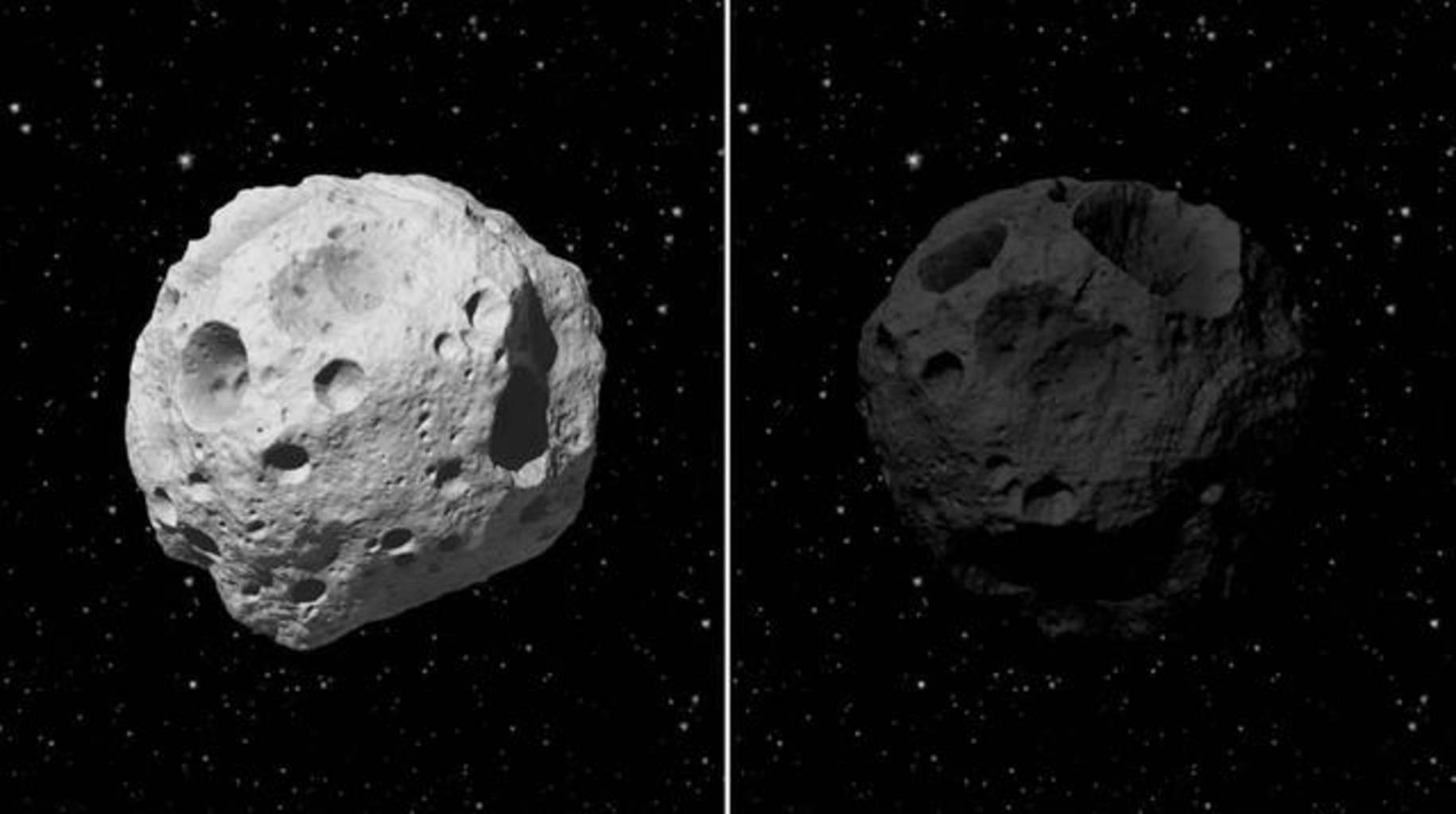
All in all, asteroid mining is a long game. It draws on decades of space research and entrepreneurial daring. For now, our spacecraft are still only reaching out and touching these rocks, not digging into them. But every insight counts. NASA’s emphasis on “fundamental science” means we are building the knowledge needed for a future when mining might be technically possible.
By the 2030s or 2040s, we may see initial small-scale extractions – likely not tonnes of gold, but perhaps a few dozen liters of rocket fuel or tens of kilograms of concentrated metal. If such missions succeed, they could usher in a new era of space infrastructure: fuel depots and habitats built with local materials, satellites serviced by asteroid-derived propellant, and scientists mining data (and perhaps resources) far beyond Earth.
As Neil deGrasse Tyson once said, the first trillionaire might be the person to exploit asteroid resources – but only if we make the leap from theory to reality. For now, asteroid mining remains on the horizon. It combines bold engineering with cutting-edge science, high risk with potentially high reward. The coming years will tell whether it is truly “the next gold rush” or a fascinating experiment in pushing human industry into the final frontier.