
Space mining starts with one basic question: what’s actually out there, and can we use it?
On Earth, we have tried-and-tested ways to classify resources – systems built on drilling, lab tests, and decades of mining. But the Moon is different. No atmosphere, no water cycle, and no easy way to sample what’s beneath the surface.
If we want to extract oxygen, metals, or water from the lunar surface, we need a new way to classify materials – one that works with lunar soils, space weathering, and extreme conditions. In this post, we’ll explore how Earth’s system compares to what we’re building for the Moon – and why understanding things like particle size, melting point, and in-situ resource utilization is key to making lunar mining possible.
Earth’s Classification: From Reserves to Reality
On Earth, geologists don’t just find resources – they classify them. Why? Because mining is expensive, and investors, engineers, and governments need to know how sure we are that something valuable is there, and how realistic it is to get it out.
Here’s how it works:
- Resources are concentrations of materials like iron, copper, or water that we believe are present, but we’re not always certain if they can be extracted profitably.
- Reserves are the part of those resources we know we can extract with existing technology, at today’s prices, and under current regulations.
To break it down even further:
- Measured resources have been thoroughly tested—think detailed drill cores and lab results. We know their location, quality, and size very precisely.
- Indicated resources are fairly well known but less detailed.
- Inferred resources are mostly educated guesses, often based on limited sampling or remote sensing.
This system helps mining companies plan where to dig, estimate costs, and decide what tech they’ll need for mineral processing. For example, a measured iron ore deposit near infrastructure is likely to be turned into a reserve. An inferred deposit deep in the jungle? Maybe not.
This classification system also feeds into water management, environmental impact reports, and project timelines. Everything from mine safety to local community impact depends on how accurately we know what’s underground.
But here’s the catch: all of this assumes we can drill, sample, and map the site extensively.
Why the Moon Requires a Different Approach
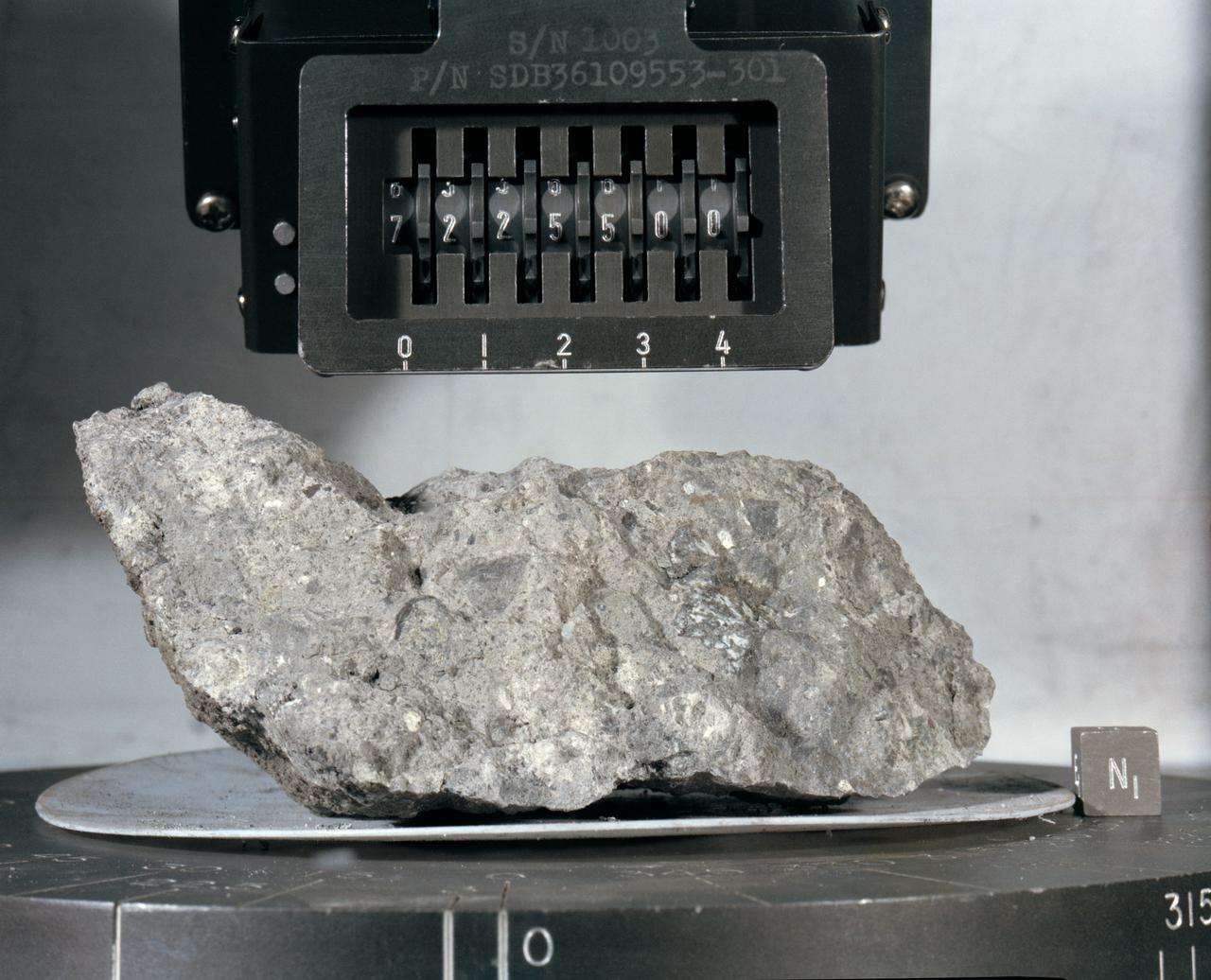 Lunar sample from Apollo 17 mission
Now let’s shift to the lunar surface. We can’t drill dozens of test holes or send ore samples to a lab. Every robot we land there costs millions, and the data is limited.
The Moon has no rain, rivers, or tectonic shifts. Instead, its top layer – lunar regolith – has been shaped by billions of years of micrometeorite impacts, solar radiation, and the gradual breakdown of rock. This means that space weathering has altered both the chemistry and spectral response of surface materials. What looks like a mineral-rich site from orbit might behave very differently on the ground.
The regolith is dry, jagged, and ultra-fine. Unlike Earth soil, which is bound together by moisture and clay, lunar regolith is loose and electrostatically clingy. It’s made of broken rock, melted glass beads, and tiny metallic fragments. There’s no easy way to compare it to Earth’s dirt or sand.
This is where practical classification comes in.
Let’s say a robotic mission lands in a crater near the lunar poles, where we think water ice exists. Engineers need to know:
- What’s the particle size distribution of the surface? Can our drills handle it?
- What’s the shear strength of the soil? Will the lander sink?
- Is the glass content high? That affects melting point and 3D printing potential.
- What’s the bulk elemental composition? That tells us what oxygen, silicon, or metals we might extract.
Because the Moon’s environment is so different, we need a new way to classify and evaluate these materials for space resource utilization. That means creating a system that isn’t just about economic feasibility, but also mission constraints: power limits, robot mobility, processing tech, and mission duration.
So while Earth’s system is built around financial return, the Moon’s system needs to be built around technical viability.
In space, it’s not about profit per ton – it’s about grams per watt.
A New Way to Think About Lunar Soil
Scientists can’t use Earth’s soil classification system for the Moon because the Moon has no clay, water, or organic matter. So instead, they’ve proposed a system based on two main properties:
- Bulk iron content – How much iron is in the soil? This affects its potential for oxygen extraction or metallurgy.
- Mean particle size – Are we dealing with fine dust or coarser grains?
Combining these gives us a lunar soil classification system that’s more practical for space operations. For example, a high-iron, fine-grain soil might be ideal for making oxygen or metal parts, while coarse, low-iron soil might be better for radiation shielding.
Also important: particle size distribution. The Moon’s regolith isn’t just dust – it ranges from microns to gravel-sized chunks. And specific surface area (the total surface area per unit weight) is key for chemical reactions. Finer particles have higher surface area, which can speed up things like oxygen release when heated.
So yes, particle size really matters.
What Are Lunar Regolith Simulants?
Since we can’t practice mining or building on the actual lunar surface, scientists rely on lunar regolith simulants – Earth-made materials that imitate lunar soils as closely as possible. These simulants are made by crushing terrestrial rocks to match the Moon’s particle size, glass content, and bulk elemental composition.
While they aren’t perfect replicas, they’re close enough for lab testing, and they’ve become essential for developing space mining and construction technologies.
Two of the most commonly used simulants are:
- JSC-1A: Mimics basaltic soils found in the lunar maria. It’s dark, rich in iron-bearing minerals, and ideal for oxygen extraction experiments.
- NU-LHT: Simulates the light-colored anorthosite found in the lunar highlands. It’s used to study materials from the Moon’s older crust, especially for additive manufacturing.
These simulants help test tools, processing systems, and even building methods before we launch them into space. Without them, we’d be designing everything blind.
Why Simulant Properties Matter for Moon Missions
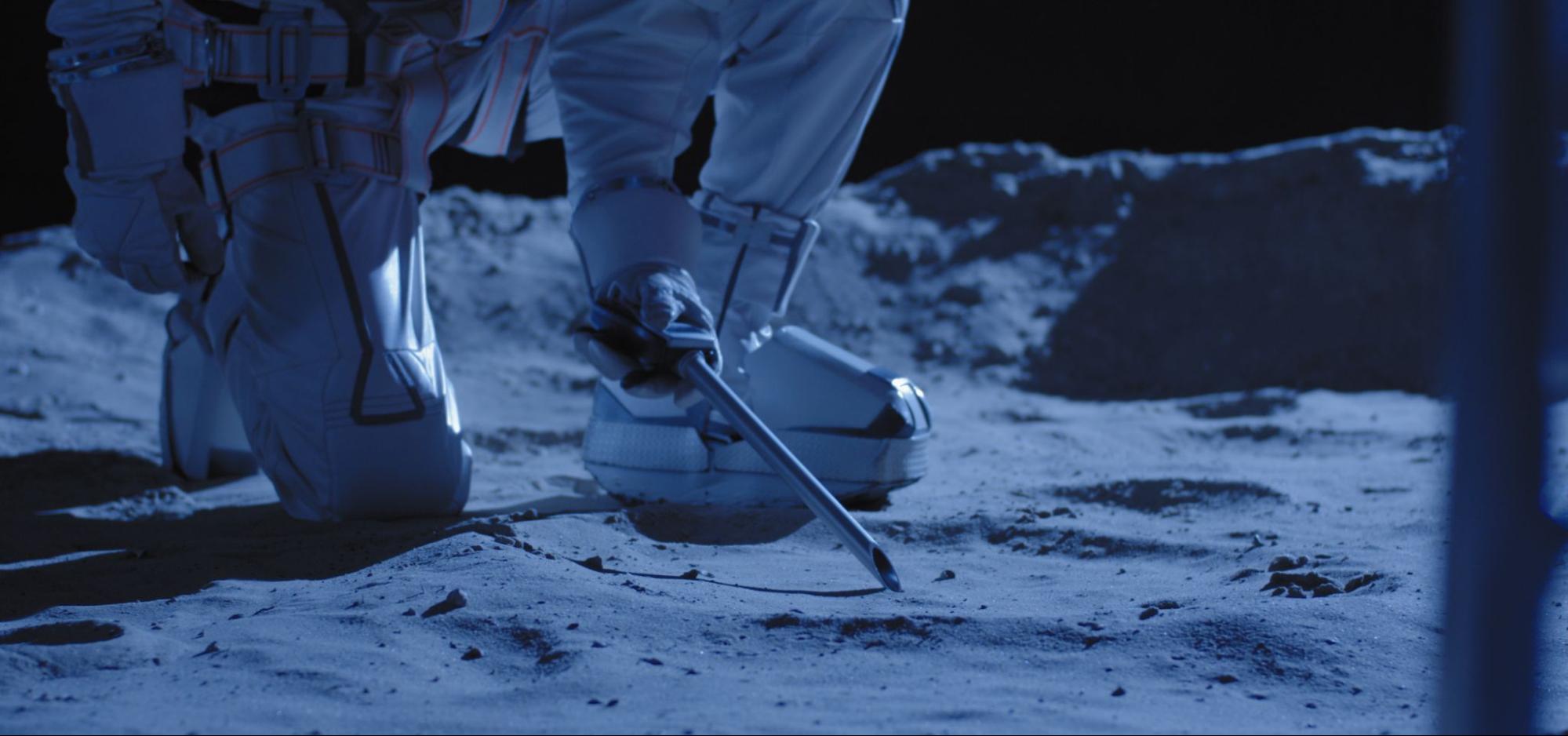
Once we have the right simulant, researchers use it to study how future missions might interact with real lunar regolith properties. They measure things like:
- Shear strength: How much pressure the soil can take before collapsing—key for landers, drills, or rovers.
- Surface roughness: Affects dust behavior, especially around sensitive instruments or joints.
- Glass content and melting point: Crucial for 3D printing methods like selective laser sintering, which melt regolith to create building blocks.
- Specific surface area: Determines how easily heat or chemicals can react with the material – important for extracting oxygen or metals.
- Particle bonding concepts: Help researchers understand how grains fuse together when sintered, and how to control cracking or warping.
These practical experiments are already shaping real tools:
- Excavation tools are tested on simulants with different particle size distributions to simulate soft vs. coarse regolith layers.
- Oxygen extraction units use simulants to practice pulling O₂ from ilmenite or silicates using heat or gas.
- Lunar-based construction teams test whether printed bricks can survive Moon-like temperature cycles.
By using regolith simulants, space engineers can design smarter systems, reduce mission risk, and start preparing for full-scale space resource utilization – all without ever leaving Earth.
From Regolith to Resources
When it comes to mining the Moon, everything starts with the regolith. But it’s not just about digging. We need to:
- Detect materials from orbit using remote sensing and study how they reflect light (that’s where spectral response comes in).
- Confirm presence with landers or rovers – future missions will drill into the surface at places like the lunar poles, where water ice may exist.
- Analyze samples using tools like X-ray diffraction to identify crystalline minerals like pyroxene, olivine, or plagioclase.
- Process those minerals on-site – this is where mineral processing and in situ resource utilization become real.
For example, we can extract oxygen from minerals using heat or chemicals. We might even split water ice into hydrogen and oxygen – great for fuel. This is what we mean by Lunar resource utilisation: using what’s already out there, so we don’t have to carry it all from Earth.
Additive Manufacturing: Printing with Moon Dust
Why not just send everything we need from Earth?
Because it’s expensive. Launching material costs thousands of dollars per kilogram. That’s why researchers are working on 3D printing technologies that use lunar regolith simulants.
Selective laser sintering is a top method: lasers melt regolith grains into solid structures, layer by layer. It works best with certain particle bonding concepts, where grains fuse thanks to heat and pressure.
To make this efficient, we need to control:
- Particle size distribution
- Glass content (glass melts easier than crystal)
- Melting point of each mineral
- Heat capacity – how much energy is needed to melt or sinter a material
Early tests show we can build simple shapes – like landing pads or radiation shields – using only simulants and lasers. But long-term, we want to scale up to Lunar-based manufacturing and construction of habitats, roads, and more.
The Special Case of the Lunar Poles
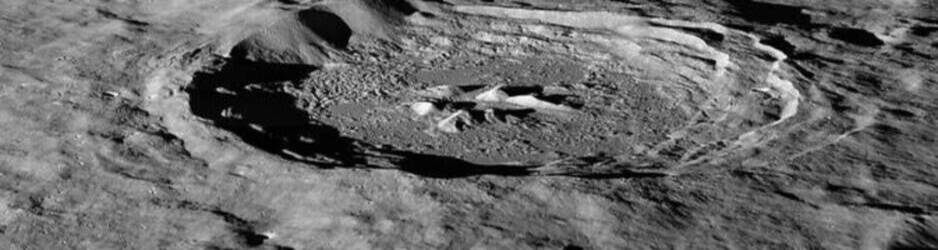
Most of the Moon is dry, but the lunar poles – especially permanently shadowed craters – might hold water ice. This is huge for space mining because water supports life, can be split for rocket fuel, and plays a role in water management for habitats.
Finding it isn’t easy. Ice may be buried under dust, trapped in tiny grains, or mixed with impact melt (rock fused by heat from meteorites). And since we can’t send drill rigs everywhere, we rely on remote sensing and follow-up robotic sampling to narrow down targets.
Once we know where the ice is, we’ll need to:
- Develop heaters to extract vapor
- Filter and store it for use
- Recycle it carefully (nothing goes to waste in space)
Water is the key to everything. No wonder it’s the top goal of NASA’s space resource utilization planning.
Apollo 17: A Case Study in Lunar Soils
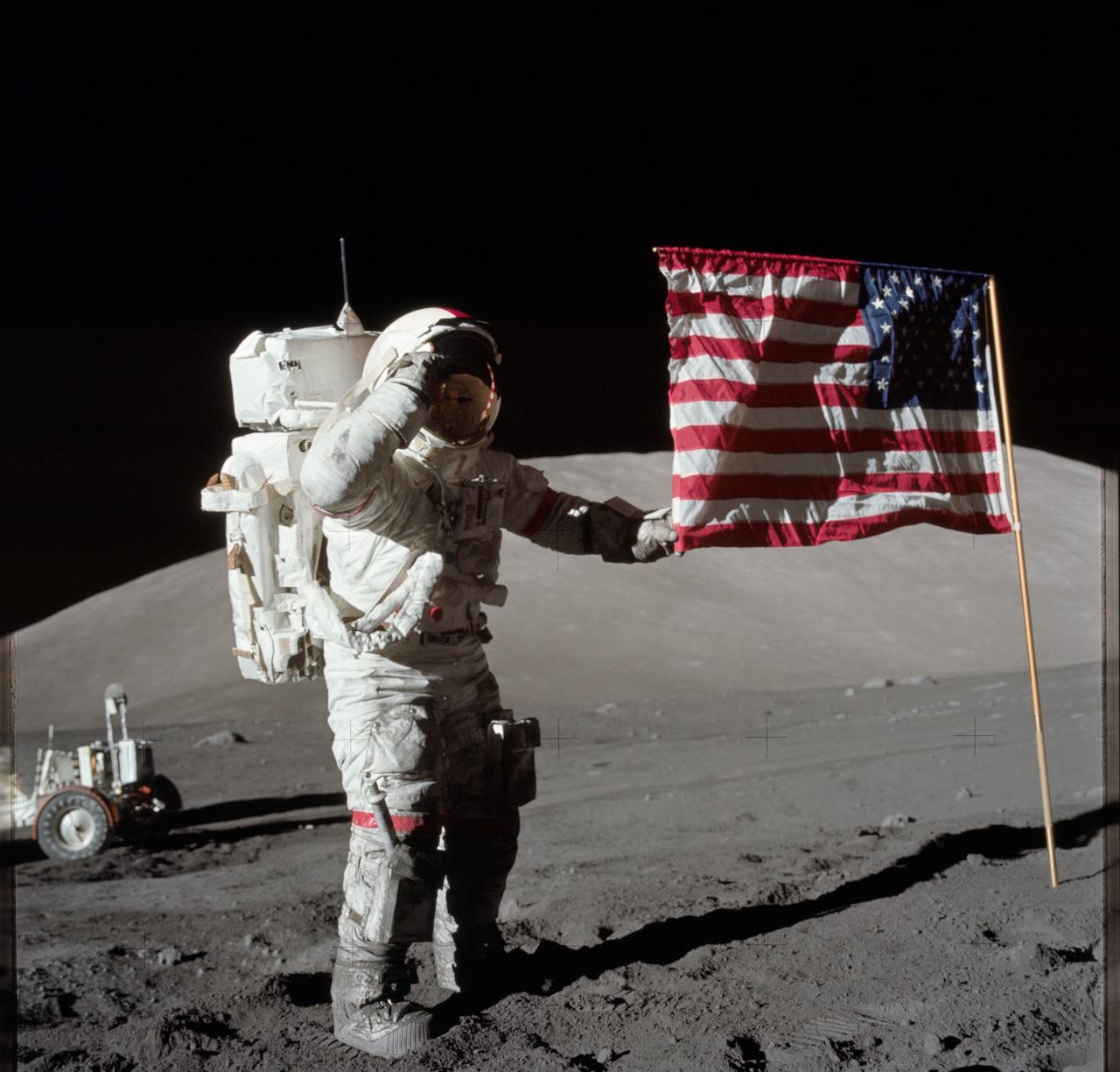
The Apollo 17 mission in 1972 was more than just NASA’s last Moon landing – it was a scientific milestone. Astronauts Eugene Cernan and Harrison Schmitt collected over 110 kilograms of lunar soils, rocks, and core samples from the Taurus–Littrow valley, an area chosen for its mix of volcanic features and impact melt zones.
These samples helped shape everything we know about the lunar surface. They revealed high glass content from ancient meteorite collisions, unique bulk elemental compositions, and a wide particle size distribution – from fine dust to gravel. This was our first close look at how space weathering alters soil over billions of years.
Some samples even came from deep layers of the Moon, offering rare clues about the lunar mantle. These findings helped calibrate remote sensing data and refine lunar regolith simulant recipes used for testing mining tools, X-ray diffraction analysis, and ISRU experiments back on Earth.
In short, Apollo 17 gave us more than rocks. It gave us the baseline for understanding lunar regolith properties – and that’s the foundation for future space resource utilization.
Why Classification Still Matters
You might ask: why do we care about classifying things? Isn’t it enough to just find and use the resources?
Well, not quite.
To build a mining plan, you need to know:
- What’s there (composition, depth, particle size)
- How sure we are (is it a guess or a proven deposit?)
- How useful it is (can it be processed or printed?)
Without clear categories, investors, space agencies, and engineers can’t make decisions. That’s why we’re adapting Earth’s classification systems to fit space. New frameworks are being proposed, blending geology, mission design, and economic logic.
Eventually, we’ll have our own lunar version of “reserves” and “resources” – but built around mission profiles, ISRU needs, and lunar regolith properties instead of market prices.
What’s Coming Next?
Future missions (like NASA’s VIPER rover and ESA’s Prospect package) will gather new data from the Moon’s surface – especially near the poles. This will help refine our models of particle size, shear strength, bulk elemental composition, and more.
In the meantime, scientists and engineers are experimenting with regolith simulants, designing tools for mineral processing, testing 3D printing, and simulating how materials behave under lunar conditions.
As we continue, we’ll get better at defining what counts as a usable resource on the Moon. We’ll improve our lunar soil classification system, refine tools like X-ray diffraction, and build better models of heat capacity, melting point, and space weathering.
Bit by bit, the Moon is becoming less of a mystery – and more of a place we can work.